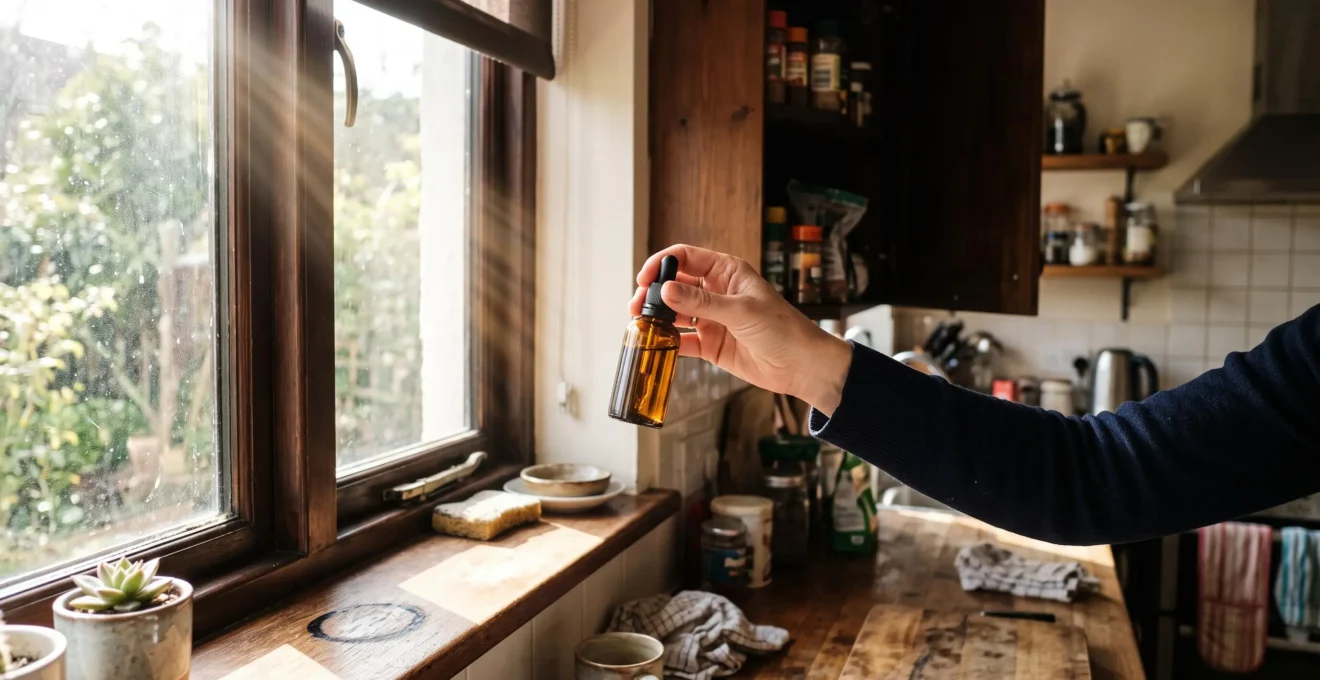
Ultraviolet exposure can affect the chemical stability of CBD oils by initiating light-dependent reactions that alter cannabidiol and other light-sensitive components. The extent of degradation depends on the wavelength reaching the product, exposure duration, formulation, packaging and surrounding temperature. A bottle does not necessarily need to become visibly discolored before its composition begins changing.
For anyone keeping CBD oil near a sunny window, inside a vehicle or on an exposed shelf, storage location is a practical factor worth controlling. Light protection does not require specialized equipment: a closed cupboard, the original carton and a properly sealed bottle can significantly reduce avoidable exposure.
Scientific findings also require careful interpretation. Some controlled experiments identify substantial light-associated degradation, while others report limited changes under different conditions. Understanding those differences helps distinguish established photochemical risks from assumptions about how quickly an ordinary CBD product deteriorates at home.
CBD Oil and UV Exposure: Essential Storage Facts
- CBD can undergo photodegradation under particular UV wavelengths, but exposure does not produce identical effects across all formulations or lighting conditions.
- Amber glass reduces transmission of potentially damaging light but cannot fully protect oil left in direct sunlight, especially when the bottle becomes warm.
- Keeping CBD oil tightly closed, away from windows and inside a dark, temperature-stable storage space is a practical preventative measure.
- Why Can UV Light Accelerate Changes in Botanical CBD Formulations?
- How Can You Reduce UV Exposure to CBD Oil Without Special Storage Equipment?
- Direct Sunlight or Indoor Light: Which Is the Bigger Risk for Stored CBD Oil?
- Does Amber Packaging Make It Safe to Leave CBD Oil in Direct Sunlight?
- When Should You Move a CBD Product to a Darker Storage Location?
- Why Does Amber Glass Protect CBD Oil Better Than Clear Glass from Light?
- Which Everyday Storage Mistakes Can Undermine CBD Extract Integrity?
- Why Are Amber Glass Vials Commonly Used for CBD Oils and Botanical Extracts?
Why Can UV Light Accelerate Changes in Botanical CBD Formulations?
UV light can accelerate changes in CBD formulations because photons at certain wavelengths have enough energy to initiate chemical reactions involving cannabidiol and other sensitive molecules. These reactions may transform the original compounds into photoproducts, reducing their measured concentrations. However, UV wavelengths do not affect CBD equally, and the response of a finished oil depends on its formulation and exposure conditions.
Photodegradation occurs when a molecule absorbs light energy and subsequently undergoes a chemical transformation. CBD has a molecular structure capable of participating in such reactions. Rather than merely causing the oil’s appearance to fade, irradiation can change the chemical identity or concentration of its constituents.
Experimental evidence demonstrates why wavelength specificity matters. A 2026 investigation described in the PubMed record of cannabinoid UVA and UVB photolysis research examined several cannabinoids under controlled irradiation. Significant CBD photodegradation occurred at 280 nm, whereas the tested 365 nm UVA exposure produced no significant degradation.
This distinction is important for household storage. UVB at 280 nm in a laboratory experiment is not representative of ordinary sunlight passing through window glass. The results demonstrate CBD’s susceptibility under specific conditions, not that every brightly lit room produces rapid UV-driven degradation.
Photodegradation should also be distinguished from oxidation associated with oxygen and temperature. Light can initiate or contribute to chemical transformations, while heat and oxygen may affect stability through additional pathways. More than one mechanism may operate in the same bottle.
Research on CBD dissolved in sunflower oil provides an example of this complexity. A Pharmaceutics study of CBD powder and sunflower oil stability found that the tested light exposure alone did not produce demonstrable CBD degradation at 25°C. Combinations involving temperature, oxygen and formulation conditions could nevertheless contribute to instability.
Possible observable changes include yellowing or darkening, altered aroma and changes in oil viscosity. These signs are not interchangeable measurements of CBD potency. Terpenes, carrier oils and other botanical constituents can also change, and some characteristics may reflect processes other than direct UV photolysis.
Chemical degradation products may differ from the original constituents, but the cited photostability findings do not establish their specific clinical effects or toxicity. Noticeable discoloration or an unusual odor should therefore encourage caution rather than an unsupported conclusion about the product’s safety.
The practical goal is to minimize avoidable exposure without assuming that every brief encounter with daylight has already damaged the formulation. That principle leads to straightforward household storage measures.
How Can You Reduce UV Exposure to CBD Oil Without Special Storage Equipment?
Reducing UV exposure to CBD oil usually requires no additional equipment. Keep the bottle in a closed cupboard or drawer, retain its original cardboard box when available, and avoid locations receiving direct sunlight. Choose a reasonably stable room temperature, close the container after each use and protect it during travel. Darkness is the primary requirement for limiting light exposure.
A closed cupboard blocks incoming light more consistently than a shelf that appears shaded at one particular time of day. The original product carton provides an additional opaque barrier, although it does not substitute for a properly sealed primary container.
A useful starting point is to inspect where the bottle normally stays. A kitchen counter may look protected in the morning but receive direct afternoon sunlight. A bedside shelf may be exposed to strong daylight for several hours, while a bathroom counter can combine illumination with fluctuating temperature and humidity.
Ask two questions about each location: does sunlight reach the bottle at any point during the day, and does artificial lighting illuminate it regularly for extended periods? If either answer indicates substantial exposure, relocate the product to an enclosed storage space.
Travel deserves additional attention. A bottle taken out of its home cupboard may spend time on a hotel windowsill, in an exposed bag or inside a vehicle. An opaque pouch or cloth wrapping can protect against incidental light, provided the bottle remains upright and securely closed.
A glove compartment is not a reliable long-term storage location. Although it blocks light while closed, the vehicle interior may experience substantial temperature changes. Similarly, a bag left in direct sunlight can become warm despite shielding the oil from UV radiation.
Refrigeration is not automatically necessary for UV protection. A closed refrigerator is dark, but so is a suitable cupboard. Research on certain tested CBD formulations found improved stability at lower temperatures, yet that does not establish a universal refrigeration requirement. Follow the manufacturer’s storage instructions, particularly when temperature or condensation is relevant.
Five Steps to Make Your CBD Storage More Light-Protective
- Inspect the usual storage spot: check for direct sunlight at different times of day and record whether the bottle receives any.
- Choose an enclosed location: identify one closed cupboard or drawer away from direct sunlight and obvious heat sources.
- Retain the original packaging: place the sealed bottle back in its carton, if available, and confirm the carton closes fully.
- Prepare travel protection: designate an opaque pouch or protective wrapping and confirm that the bottle fits securely.
- Record a storage baseline: note the opening date and the product’s initial appearance so future observations have a reference.
Once an enclosed storage location is established, the next question is which light sources deserve the most attention and why cumulative exposure matters.
Direct Sunlight or Indoor Light: Which Is the Bigger Risk for Stored CBD Oil?
Direct sunlight is generally the greater immediate concern for CBD oil storage because it can deliver stronger UV and visible-light exposure while also heating the container. Indoor lighting may matter when exposure is prolonged, but the risk depends on the lamp spectrum and formulation. Neither brightness nor exposure duration alone determines CBD degradation; wavelength, intensity, temperature and packaging must be considered together.
Sunlight contains a broad range of wavelengths, whereas different indoor lighting technologies produce distinct spectral distributions. A typical household LED emits very little UV, so its brightness does not necessarily indicate substantial ultraviolet exposure. Some fluorescent lamps emit small amounts of UV, although the exposure reaching a bottle depends on the lamp and its shielding.
A window introduces another distinction. Ordinary window glass attenuates much of the UVB reaching it while allowing portions of UVA and visible light to pass. Therefore, indirect daylight beside a window should not be treated as equivalent to controlled UVB irradiation.
Nevertheless, a bottle positioned near a window may receive recurring light exposure over many days. Consistent illumination can matter even when no strong sunbeam falls directly onto the container.
The following comparison separates common exposure situations without assuming that they produce equivalent chemical effects.
| Storage condition | Relevant exposure | Recommended response |
|---|---|---|
| Direct outdoor sunlight | Intense broad-spectrum light and possible heating | Move the bottle into shade and enclosed storage |
| Window-adjacent shelf | Repeated daylight exposure, varying by glazing and sun angle | Choose a closed cupboard instead |
| Regular household LED lighting | Generally minimal UV but potentially prolonged visible light | Avoid unnecessary continuous display exposure |
| Fluorescent or specialized display lighting | Spectrum and duration depend on the equipment | Limit continuous exposure and use opaque storage |
| Closed drawer or cupboard | Minimal light when closed | Preferred everyday storage condition |
It is useful to think about cumulative exposure as a combination of spectral intensity and time. However, a few minutes in strong sunlight cannot be assumed to cause the same CBD loss as weeks under an indoor lamp. Different wavelengths may initiate different reactions, and the cited research does not establish a conversion between these situations.
Evidence from other CBD formulations supports the importance of light while illustrating these limits. A Scientific Reports study of CBD e-liquid photostability compared daylight exposure with dark storage over 30 days. Average CBD concentration decreases were approximately 13% for light-exposed samples and 4% for dark-stored samples.
Those figures concern the tested e-liquids, not conventional CBD oils in MCT or other carrier oils. Natural daylight exposure also does not isolate UV from visible-light effects.
For household decisions, avoiding direct sun and persistent window exposure is a defensible precaution. Packaging then determines how much of the remaining light reaches the formulation.
Does Amber Packaging Make It Safe to Leave CBD Oil in Direct Sunlight?
No. Amber packaging reduces the amount of light reaching CBD oil, particularly across parts of the ultraviolet and shorter-wavelength visible spectrum, but it does not provide complete protection. Its effectiveness depends on the glass and container design. Direct sunlight can also warm the bottle, introducing temperature-related instability that light-filtering glass cannot prevent.
The characteristic color of amber glass results from its optical absorption properties. Compared with ordinary clear glass, amber glass generally transmits less light in spectral regions relevant to many photochemical reactions.
However, the term « amber glass » does not guarantee a particular transmission performance. Bottle composition, wall thickness, color intensity and manufacturing specifications can influence the amount of light passing through. A container’s overall protection also depends on its closure and other exposed components.
Some droppers have translucent sections that receive light during handling. Although brief use is different from prolonged storage, leaving a bottle open or exposed can undermine the protective role of its packaging.
Heat creates a second concern. A bottle in direct sunlight can become warmer, including when the glass itself absorbs incoming radiation. Elevated temperatures may encourage chemical changes independently of direct photolysis, especially when oxygen and formulation characteristics also contribute.
A 2026 investigation titled 2026 study of CBD degradation and discoloration in MCT oil compared storage conditions involving clear and amber vials, light exposure and different temperatures. Clear, light-exposed containers showed the greatest overall CBD loss and discoloration under the tested conditions. Combined light and elevated-temperature exposure intensified the observed changes.
Controlled Storage Evidence: CBD in MCT Oil
The researchers investigated cannabidiol dissolved in medium-chain triglyceride oil, using container and exposure conditions that included clear vials kept dark, amber vials exposed to light and clear vials exposed to light.
The strongest overall degradation and discoloration occurred in light-exposed clear containers. These results support protective packaging and careful storage, but they do not establish a universal household degradation rate or isolate every effect as UV-specific.
Amber packaging should therefore be understood as a supplementary protective barrier, not permission for sunlight exposure. It is useful during ordinary handling and incidental illumination, while dark storage limits the light reaching the bottle in the first place.
The most reliable arrangement combines suitable packaging with a consistently dark location rather than depending on either measure alone.
When Should You Move a CBD Product to a Darker Storage Location?
Move CBD oil to a darker location whenever its usual storage spot receives direct sunlight, recurring window light or prolonged unnecessary illumination. Do not wait for discoloration or an unusual smell before acting. Changes in season, household arrangements, packaging or frequency of use are useful triggers for reassessing where the bottle is kept.
The best time to prevent light exposure is before a product develops visible changes. A bottle left on an open shelf may remain apparently normal while its contents undergo gradual chemical changes, and visual inspection alone cannot establish retained CBD concentration.
Seasonal shifts are an easily overlooked reason to reconsider storage. As sun angles change, a shelf previously protected by shade may receive direct daylight during part of the year. Curtains, nearby furniture and window orientation also influence exposure.
There is a practical difference between unopened products and bottles already in regular use. An unopened bottle intended for longer storage benefits from remaining in its original protective packaging in a stable location. For an opened bottle, ease of access matters because an inconvenient storage arrangement may encourage leaving it out after each use.
A frequently used product can remain in an accessible closed drawer or cupboard. The bottle should be resealed promptly, and any specific manufacturer instructions about storage after opening should be followed.
Partially used products that have been forgotten for months deserve particular attention. They may have experienced prolonged exposure, repeated opening or temperature changes that are no longer easy to reconstruct.
Inspecting such a product’s appearance and odor can identify obvious abnormalities, but it cannot confirm its potency or safety. If there is unusual discoloration, an off-odor, evidence of contamination or uncertainty about recommended shelf life, consult the product guidance and avoid assuming it remains suitable simply because the bottle is intact.
A useful review can be triggered by moving the bottle from its carton to an open shelf, changing rooms, returning from travel or switching from frequent use to occasional use. None of these events requires waiting for a fixed number of days.
Once storage habits are established, container choice becomes the next protective factor, particularly when comparing clear and amber glass.
Why Does Amber Glass Protect CBD Oil Better Than Clear Glass from Light?
Amber glass generally protects CBD oil better than clear glass because its composition absorbs more ultraviolet and short-wavelength visible light before those wavelengths reach the liquid. Clear glass commonly allows greater light transmission, although its UV performance depends on the glass type. The resulting advantage is a reduction in potentially damaging exposure, not a guarantee that the CBD remains chemically unchanged.
Different wavelengths pass through packaging materials at different rates. Ordinary clear glass transmits substantial visible light and portions of UVA, while blocking much shorter ultraviolet wavelengths. Amber glass additionally attenuates parts of the near-UV and blue-violet range.
This filtering matters because photochemical reactions depend partly on whether the formulation absorbs the wavelengths that reach it. The relationship is not simply that darker-looking glass always produces proportionally greater CBD protection.
The effectiveness of a bottle must be considered as a complete packaging system. Glass composition and color affect light transmission, while closure design influences sealing. Headspace, repeated opening and storage location can also influence stability through factors other than light.
A dropper bottle presents particular handling considerations. A translucent pipette or cap may provide a less effective light barrier than the amber body, depending on the design. Leaving the dropper outside the bottle also introduces opportunities for exposure and contamination.
Direct contact between the dropper and fingers, skin or other surfaces can introduce unwanted material into the container. This is a hygiene and handling concern rather than a property of amber glass itself.
Other packaging approaches may offer stronger light barriers. Fully opaque containers and appropriately designed aluminum packaging can prevent more light from reaching a product than some amber glass bottles. UV-blocking sleeves may also add protection, depending on their construction.
The preferred format still depends on material compatibility, sealing performance and the requirements of the formulation. An opaque container is not automatically superior if its closure is unreliable or its material is unsuitable for prolonged contact with the contents.
Packaging choice reduces exposure opportunities, but daily handling errors can undermine those advantages even when the original bottle is appropriately designed.
Which Everyday Storage Mistakes Can Undermine CBD Extract Integrity?
Common CBD storage mistakes include leaving bottles on sunny windowsills, keeping them in warm vehicles, storing them near fluctuating heat sources and failing to reseal droppers properly. Transferring oil into clear decorative bottles or allowing the dropper to contact contaminated surfaces can introduce additional risks. Several unfavorable conditions may occur together, making the cause of later deterioration difficult to identify.
Light exposure rarely exists in isolation. A kitchen windowsill may expose the container to daylight, elevated temperatures and repeated heating cycles. A vehicle can combine sunlight with substantial temperature fluctuations. These conditions may contribute through different chemical pathways, although their effects cannot automatically be treated as additive or greater than additive without formulation-specific testing.
Bathroom storage introduces another combination. Illumination, warm showers, changing humidity and repeated use may all be relevant. Humidity is particularly concerning if the closure is left open or water comes into direct contact with the dropper or product.
Containers should be sealed according to their design after use. Leaving a dropper partially unscrewed can increase contact with the surrounding environment. Returning a dropper that has touched skin or another surface can introduce contaminants, even if the oil itself has been protected from sunlight.
Decanting CBD oil into a decorative clear bottle sacrifices the original packaging’s known characteristics. It may increase light exposure and introduce handling contamination. Unless the replacement container is demonstrably suitable for the formulation, keeping the product in its original packaging is the more controlled choice.
Simple recordkeeping can make changes easier to recognize. Note the purchase date, opening date and applicable manufacturer guidance. When first opened, observe the oil’s normal appearance and smell without relying on these observations as scientific measures of potency.
The distinction between an observable warning sign and a reliable test is important. In the 2026 MCT-oil storage study discussed earlier, CBD concentration and yellowing showed a reported correlation of -0.79. That association indicates that color changes tracked degradation-related conditions in the experiment, but it does not provide a consumer method for calculating remaining CBD concentration.
-0.79
Reported correlation between CBD concentration and yellowing in the investigated CBD-in-MCT formulation. The relationship is not a universal conversion between bottle color and potency.
Ryu and colleagues, Industrial Crops and Products, 2026; controlled storage investigation.
Regular inspection can help detect obvious changes such as unusual color, smell or container condition. However, the absence of these signs does not establish that cannabinoid concentrations remain unchanged or that a product is suitable beyond its stated shelf life.
A reliable storage routine therefore combines light control, temperature awareness, clean handling and appropriate container sealing. These considerations also explain why amber glass became a widely used packaging choice for sensitive liquid formulations.
Key Takeaways Before Choosing CBD Oil Packaging
- Prioritize the full packaging system: light-filtering glass is helpful, but the closure, material compatibility and storage environment also matter.
- Separate protective performance from appearance: an amber color does not independently verify a bottle’s light-transmission specifications or sealing quality.
- Keep responsibility shared: packaging can limit exposure, while everyday storage and handling determine whether that protection is maintained.
Why Are Amber Glass Vials Commonly Used for CBD Oils and Botanical Extracts?
Amber glass vials are commonly used for CBD oils and botanical extracts because they combine light filtering with the practical advantages of a glass container. Properly manufactured glass is generally chemically resistant, while a suitable closure helps isolate the formulation from its surroundings. Amber packaging is therefore a useful protective design choice, although its performance depends on construction and storage conditions.
Colored glass has a long history in pharmaceutical and botanical packaging, where limiting light exposure has been important for sensitive preparations. Amber bottles continue that established packaging approach rather than representing a protection mechanism unique to CBD.
Glass also offers material advantages beyond its color. It is generally chemically resistant to many formulation ingredients and can provide a stable contact surface for properly designed oil packaging. This does not mean that every bottle, coating or closure component is compatible with every formulation.
Sealing performance is another consideration. A properly fitted cap and dropper assembly can limit unnecessary exposure to the surrounding environment. However, glass color itself does not make a container airtight: sealing quality depends on the closure system.
Glass containers may also be reusable under suitable conditions, but reuse requires appropriate cleaning, compatibility and closure integrity. For an existing CBD product, transferring the contents into a previously used bottle offers no automatic storage advantage.
The appearance of amber glass can function as a marketing signal, and consumers should not confuse that appearance with demonstrated protective specifications. Two similarly colored bottles may differ in wall thickness, transmission properties, closure quality and manufacturing standards.
A more useful packaging assessment considers whether the bottle is intact, the closure fits securely, the container is suitable for the formulation and the manufacturer provides clear storage instructions. A protective outer carton may add another straightforward barrier.
Importantly, the scientific evidence discussed throughout this article does not establish that amber glass always outperforms every alternative. Opaque packaging may provide stronger light exclusion in some contexts, while appropriate container compatibility and sealing remain essential.
For a product already supplied in an intact amber bottle, changing containers solely to obtain darker packaging is generally less practical than improving its storage location. Keeping that bottle away from sunlight avoids unnecessary handling while preserving the protection built into the original packaging.
Choose a dark, stable storage location for the original, properly sealed bottle, retain the outer packaging when practical and review the manufacturer’s instructions before deciding whether additional protection is needed. These manageable steps address avoidable exposure without assuming that packaging alone determines a CBD oil’s shelf life.
Can UV exposure reduce CBD concentration without changing the oil’s color?
Yes. A visible color change is not a necessary condition for chemical degradation. Research has identified associations between CBD concentration changes and discoloration in particular formulations, but visual inspection cannot establish the remaining CBD content. Measuring concentration reliably requires appropriate analytical testing.
Does sunlight passing through a closed window contain enough UV to damage CBD oil?
Window glass filters much of the shorter-wavelength UV radiation, including substantial UVB, while allowing some UVA and visible light to pass. The resulting exposure depends on the glazing, illumination and bottle packaging. The cited research does not establish a universal CBD degradation rate beside a window, so dark storage remains a sensible precaution.
Can a CBD oil bottle become unstable even when stored in darkness?
Yes. Darkness reduces light exposure but does not eliminate changes associated with temperature, oxygen, formulation properties or prolonged storage. Controlled research on CBD in sunflower oil found that stability depended on several conditions. Products should remain properly sealed and within the manufacturer’s recommended storage and shelf-life limits.
Can CBD oil that has become darker be restored by moving it into a cupboard?
Moving the bottle into darkness can reduce further light exposure, but it does not reverse chemical transformations that have already occurred. Darkening alone cannot identify the cause or quantify degradation. If the appearance has changed unexpectedly, check the product guidance rather than assuming that improved storage restores its original properties.
Is laboratory testing necessary to know how much CBD remains after prolonged light exposure?
Reliable determination of remaining CBD concentration requires a validated analytical method rather than visual or sensory inspection. Laboratory research uses chemical analysis to distinguish actual concentration changes from changes in appearance. For ordinary consumers, avoiding prolonged exposure and following product storage guidance is more practical than attempting to estimate potency loss from bottle color.