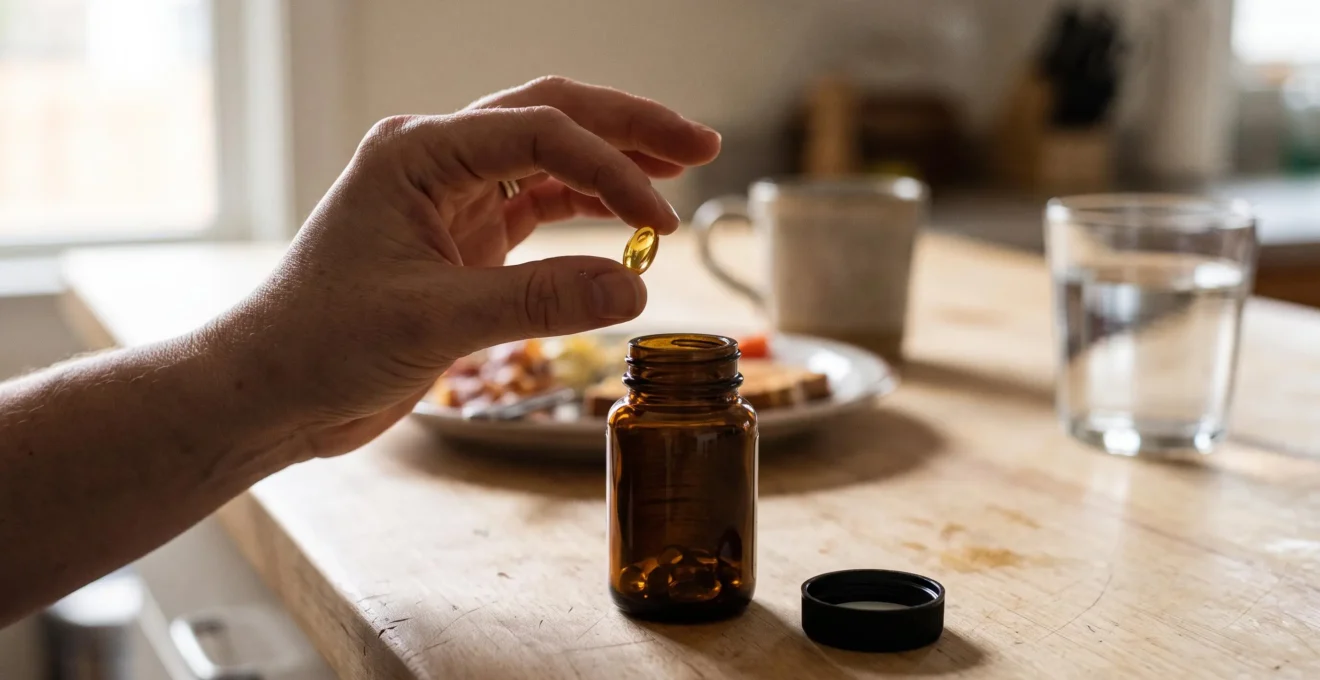
When cannabidiol (CBD) is swallowed in a capsule, softgel or oil preparation, the liver plays an important role in determining what ultimately reaches the bloodstream. After absorption from the digestive tract, some CBD enters the portal circulation and encounters metabolic enzymes in the liver before reaching the wider circulation. This process, known as first-pass metabolism, helps explain why the amount swallowed differs from the amount circulating in the body.
However, oral CBD does not follow one exclusive biological route. Its fat-soluble properties allow some absorbed CBD to enter intestinal lymphatic pathways, potentially reducing its initial exposure to the liver. The formulation, digestive conditions and individual metabolic characteristics all influence the resulting exposure.
Understanding hepatic pathways also requires separating two questions: how the liver transforms CBD itself, and how CBD may affect the processing of other substances, including medicines. These mechanisms are related but have different implications. Research on prescription cannabidiol provides useful evidence, although its findings cannot automatically be applied to every consumer CBD product.
Oral CBD and liver metabolism: Key points
- First-pass metabolism matters: CBD absorbed into the portal bloodstream encounters intestinal and hepatic metabolism before reaching general circulation, although some CBD may travel through intestinal lymphatic pathways.
- Absorption varies: Dietary fats, formulation characteristics and metabolic processes can substantially change circulating CBD exposure.
- Medication interactions require individual assessment: CBD can influence enzymes involved in processing certain medicines, making professional evaluation important when medications or liver conditions are involved.
- Why Does the Liver Process Many Swallowed Compounds Before They Circulate More Widely?
- How Does a CBD Softgel Move Through the Digestive System After Swallowing?
- Why Can the Liver Process Different CBD-Related Compounds Through Different Pathways?
- What Does Bioavailability Really Tell You When Comparing CBD Formats?
- Oral Processing or Local Topical Use: How Do Their Biological Pathways Differ?
- Why Should CBD Liver-Pathway Information Be Treated Carefully When Medicines Are Involved?
- When Should Medication Use Make General CBD Metabolism Information Insufficient?
- How Can You Interpret Hepatic Pathway Research Without Turning It into Dosing Advice?
Why Does the Liver Process Many Swallowed Compounds Before They Circulate More Widely?
The liver processes many swallowed compounds early because substances absorbed into intestinal blood vessels generally travel through the portal vein before entering the wider bloodstream. During this first passage, hepatic enzymes can chemically modify or break down absorbed molecules. For oral CBD, this process contributes to the difference between the quantity swallowed and the amount eventually circulating.
The digestive tract is not simply a passageway delivering everything directly into the bloodstream. After a compound is released from a swallowed formulation and absorbed through the intestinal wall, its route depends partly on its physical and chemical properties.
Many absorbed substances enter small intestinal blood vessels that drain into the hepatic portal vein. This vessel delivers nutrient-rich blood from the digestive organs to the liver, where specialized cells encounter compounds arriving from the intestine.
The liver acts as both a processing organ and a metabolic checkpoint. Its enzymes can transform a molecule into one or more metabolites, which may have different chemical properties and biological activities. Some unchanged molecules can also pass through into general circulation.
First-pass metabolism is therefore not equivalent to complete removal. It describes the metabolic processes encountered before a compound reaches systemic circulation, rather than guaranteeing that every absorbed molecule will be eliminated.
For CBD, the picture is more complex because some intestinal absorption may occur through lymphatic transport. Unlike portal blood, intestinal lymph initially enters the broader circulation without passing directly through the liver. A scientific review of CBD first-pass metabolism and lymphatic absorption explains how the balance between these pathways can influence oral exposure.
Lymphatic transport does not mean CBD permanently avoids hepatic metabolism. CBD reaching general circulation can still be processed by the liver later.
This distinction matters when considering oral CBD products. The amount reaching systemic circulation depends not only on absorption from the intestine but also on what happens to the compound during and after absorption.
Once this initial pathway is understood, the next question is how a specific oral formulation, such as an oil-filled softgel, releases CBD and makes it available for absorption.
How Does a CBD Softgel Move Through the Digestive System After Swallowing?
A CBD softgel begins its journey by passing through the stomach, where its capsule shell can soften and rupture, releasing an oil-based formulation. The contents then move through the digestive system, where intestinal fluids, bile and dietary fats influence CBD absorption. Absorbed CBD may enter portal blood or intestinal lymph before eventually reaching systemic circulation.
The softgel shell primarily serves as a container for the formulation. Once the shell breaks down, CBD remains associated with its carrier ingredients and interacts with the contents of the gastrointestinal tract.
Because CBD is highly lipophilic, meaning it has a strong affinity for fats, its absorption differs from that of many readily water-soluble compounds. An oil carrier can help present CBD in a lipid-containing formulation, but this does not guarantee complete or predictable absorption.
In the small intestine, bile components and digestive processes help disperse dietary fats into structures that support the movement of lipid-associated substances toward the intestinal surface. CBD that becomes available for absorption may cross intestinal cells and subsequently follow different transport pathways.
Food can substantially influence this process. In a human pharmacokinetic study involving eight adults with refractory epilepsy, researchers compared purified CBD capsules taken after a high-fat meal with the same preparation taken while fasting.
14-fold higher peak concentration
Mean maximum plasma CBD concentration was 14 times higher after a high-fat meal than under fasting conditions. Overall exposure, measured by AUC, was approximately four times higher. These findings came from a small study of eight adults and cannot be assumed to apply to every CBD softgel.
Findings from a clinical study of food effects on CBD capsule pharmacokinetics, published in Epilepsia.
The result demonstrates that meal conditions can materially affect measured systemic exposure. It does not establish that every meal will produce the same change, nor does it justify adjusting CBD intake without considering the formulation and individual circumstances.
Even among oil-filled products, differences in the carrier composition, dispersion and manufacturing characteristics may influence absorption. The term softgel describes a dosage form, not one universal pharmacokinetic behavior.
Once CBD has entered the body, the liver’s metabolic enzymes introduce another layer of variation by transforming CBD and its related compounds through several biochemical pathways.
Why Can the Liver Process Different CBD-Related Compounds Through Different Pathways?
The liver can process CBD-related compounds differently because each molecule has its own chemical structure and may interact with different metabolic enzymes. CBD, cannabidiolic acid (CBDA) and CBD metabolites should not be treated as interchangeable substances. Their processing also depends on enzyme activity, compound concentration, metabolic conditions and the presence of other substances.
Among the main enzymes involved in CBD metabolism are members of the cytochrome P450 family. These proteins participate in chemical transformations that help the body process numerous naturally occurring and externally introduced compounds.
Human pharmacological evidence identifies CYP2C19 and CYP3A4 as important enzymes involved in cannabidiol metabolism. Other enzymes, including members of the UDP-glucuronosyltransferase (UGT) family, also participate in processing CBD-related substances.
According to the official EPIDIOLEX prescribing information on metabolism and drug interactions, cannabidiol is metabolized primarily in the liver, with contributions from CYP2C19, CYP3A4, UGT1A7, UGT1A9 and UGT2B7.
CBD metabolism illustrates how one starting compound can lead to several related molecules. CBD is converted to 7-hydroxy-cannabidiol (7-OH-CBD), which can subsequently be converted to 7-carboxy-cannabidiol (7-COOH-CBD).
These metabolites are not simply different names for unchanged CBD. They have different chemical structures, exposure profiles and potentially different biological properties.
Approximately 40 times
In repeated-administration pharmacokinetic data reported for prescription cannabidiol, exposure to the 7-COOH-CBD metabolite, measured by AUC, was approximately 40 times higher than exposure to parent CBD. This describes a specific studied preparation and exposure measurement, not the proportion of swallowed CBD converted to that metabolite.
EPIDIOLEX clinical pharmacology and pharmacokinetic data.
CBDA, an acidic cannabinoid precursor, represents a separate chemical entity. Its structure differs from that of CBD, so metabolism findings established for purified CBD cannot automatically describe CBDA or mixtures containing both compounds. Specific pathway claims about CBDA require evidence that directly investigates it.
Another essential distinction concerns the direction of enzyme interactions:
- CBD as a metabolic substrate: enzymes act on CBD and transform it into other compounds.
- CBD as an enzyme inhibitor: CBD can reduce the activity of certain enzymes involved in processing other compounds.
The second process can influence the metabolism of medications without implying that every medicine using a related pathway will be affected to the same extent.
Concentration, genetic variation, liver function and other substances present can influence these mechanisms. Findings about a particular enzyme therefore need to be interpreted in their experimental or clinical context.
These transformations also affect how researchers interpret circulating CBD measurements, which is why bioavailability requires more explanation than a single percentage on a product description.
What Does Bioavailability Really Tell You When Comparing CBD Formats?
Bioavailability describes the proportion of an administered compound that reaches systemic circulation unchanged. For CBD, it reflects the combined effects of absorption and metabolism rather than simply how much CBD a product contains. Published bioavailability values apply to particular formulations, participants and study conditions, so they should not be treated as fixed percentages for every product or individual.
When CBD is swallowed, systemic exposure depends on several processes. The formulation must release the compound, CBD must become available for intestinal absorption, and some of the absorbed material may undergo metabolism before reaching wider circulation.
This means a product’s labeled CBD quantity cannot independently establish its bioavailability.
Two pharmacokinetic measurements often appear in CBD research:
- Cmax: the highest measured concentration of CBD in blood plasma during the sampling period.
- AUC: the area under the plasma concentration-time curve, representing overall measured exposure across time.
Both measurements are useful, but neither automatically represents absolute bioavailability. Establishing absolute bioavailability generally requires comparing systemic exposure after a non-intravenous administration route with an appropriate intravenous reference, accounting for dose.
The distinction is particularly important when reading studies comparing fed and fasted conditions. A study may report substantially higher AUC after a meal without demonstrating that the absolute bioavailability of every related commercial product has increased by the same proportion.
Likewise, delivery formats cannot be ranked reliably using their nominal CBD content alone. Swallowed preparations may undergo intestinal and hepatic first-pass metabolism, while other routes can avoid some of that initial processing. Nevertheless, avoiding first-pass metabolism does not guarantee greater total exposure.
The formulation and administration route must both be considered before interpreting any comparison.
| Research detail | What to check | Why it matters |
|---|---|---|
| Administration route | Swallowed, or another clearly defined route | Routes differ in absorption and initial metabolic exposure. |
| Formulation | Oil carrier, capsule, oral solution or other preparation | Formulation characteristics can affect CBD availability for absorption. |
| Meal conditions | Fed, fasted and the meal composition where reported | Dietary fats can change systemic CBD exposure. |
| Reported measurement | Absolute bioavailability, relative bioavailability, Cmax or AUC | These metrics answer different pharmacokinetic questions. |
| Study population | Participant characteristics and relevant health conditions | Results may not transfer directly to other populations. |
A carefully qualified bioavailability claim should explain what was measured and under which conditions. A numerical result without those details offers limited help when comparing CBD formats.
The difference becomes especially apparent when contrasting swallowed preparations with products intended mainly for local application to the skin.
Oral Processing or Local Topical Use: How Do Their Biological Pathways Differ?
Swallowed CBD and locally applied topical CBD enter the body through different biological pathways. Oral CBD encounters gastrointestinal absorption and may undergo hepatic first-pass metabolism, while conventional topical formulations primarily deliver CBD into or onto skin tissues. Systemic absorption from topical products may be limited, but it depends on the formulation and cannot be ruled out universally.
For oral products, the gastrointestinal tract provides the initial route into the body. CBD must become available for absorption, cross intestinal barriers and enter blood or lymphatic transport pathways.
Once circulating, CBD may be delivered to many organs, including the liver, where additional metabolism can occur.
A conventional topical cream or lotion presents a different situation. CBD is placed on the skin surface and must cross the skin barrier to reach deeper tissues. Its movement depends on the formulation and the properties of the skin.
Experimental research published in Pharmaceutics in 2024 examined CBD delivery and distribution in human skin using colloidal topical formulations. Under the tested conditions, CBD accumulated within skin tissues to a substantially greater extent than it permeated across the skin membrane.
The measured CBD permeation across the experimental skin barrier was below the analytical detection limit after 24 hours. However, this finding does not prove that all topical preparations produce zero systemic exposure in living people.
Products intentionally engineered for transdermal delivery may differ from conventional topical formulations. Their intended purpose is to support movement across the skin rather than primarily depositing ingredients within local tissues.
The comparison can be summarized by looking at the first biological compartments encountered.
| Characteristic | Swallowed CBD | Conventional topical CBD |
|---|---|---|
| Initial site | Gastrointestinal tract | Skin surface |
| Primary absorption barrier | Intestinal epithelium | Skin barrier |
| Initial transport | Portal blood and potentially intestinal lymph | Movement into skin tissues, with formulation-dependent potential for deeper permeation |
| Hepatic first pass | Relevant to CBD entering portal circulation | Not part of initial local skin delivery |
| Systemic exposure | Possible after absorption, subject to metabolism | May be limited for conventional topical formulations; not universally absent |
Consequently, an identical CBD amount printed on two product labels does not establish comparable blood concentrations, tissue distribution or biological outcomes.
Nor does local delivery itself establish that a topical product is effective for a particular condition. Absorption evidence and evidence of clinical benefit are separate questions.
These differences explain why liver-focused discussions are particularly relevant for swallowed preparations, although medication safety requires considering actual systemic exposure and the evidence associated with each specific formulation.
Why Should CBD Liver-Pathway Information Be Treated Carefully When Medicines Are Involved?
CBD liver-pathway information requires particular care when medicines are involved because cannabidiol can inhibit enzymes responsible for processing certain drugs. Such interactions may change medication exposure and potentially influence safety or effectiveness. However, an enzyme interaction observed in laboratory research does not automatically establish a clinically important interaction with every medicine metabolized by that enzyme.
The cytochrome P450 system processes many medications alongside other compounds. If one substance reduces the activity of an enzyme involved in another drug’s metabolism, the rate at which that medication or its active metabolites are processed may change.
This mechanism is one reason CBD appears in pharmacological interaction research.
The distinction between a potential interaction and a documented clinical interaction is essential. Laboratory findings can identify pathways worth investigating, but human studies are needed to determine whether the interaction affects drug exposure under particular treatment conditions.
Prescription cannabidiol provides concrete examples.
In clinical interaction data reported for EPIDIOLEX, coadministration with clobazam increased exposure to N-desmethylclobazam, an active clobazam metabolite. Its maximum concentration and AUC were approximately three times higher under the studied conditions.
This finding should not be described simply as increase in unchanged clobazam of threefold. The measured change concerned its active metabolite.
Another important example involves valproate. The prescription labeling identifies an increased incidence of liver enzyme elevations when cannabidiol is administered with valproate. That safety finding should not be simplified into a claim that CBD merely inhibits an enzyme responsible for valproate clearance.
Drug interactions and liver safety findings are related but distinct subjects. An interaction may involve altered circulating drug concentrations, changes in metabolites or clinical safety effects that cannot be explained by a single enzyme pathway.
Furthermore, prescription cannabidiol is standardized and studied under defined treatment conditions. Its documented interactions do not establish identical risks for every nonprescription CBD preparation.
At the same time, differences between formulations do not justify dismissing potential risks associated with combining CBD and medication.
Where a person uses prescription medicines, a pharmacist or physician can review the actual drug list, relevant metabolic pathways, clinical evidence and individual circumstances. General descriptions of CYP enzymes cannot replace that assessment.
The next boundary is personal applicability: certain medication regimens and health conditions make general metabolism information insufficient for an individual decision.
When Should Medication Use Make General CBD Metabolism Information Insufficient?
General CBD metabolism information becomes insufficient when individual medication risks depend on factors that a pathway overview cannot resolve. These include medicines with narrow therapeutic windows, multiple concurrent prescriptions, impaired liver function and recent medication changes. In such situations, knowing that CBD interacts with an enzyme is not enough to judge the safety of combining substances.
A medication with a narrow therapeutic window requires particular attention because relatively small changes in drug exposure may have important clinical consequences. Whether CBD meaningfully changes that exposure depends on the specific medication, evidence and circumstances.
Multiple medications also increase the complexity of assessment. Several drugs may share metabolic pathways, influence each other’s processing or produce overlapping safety concerns that cannot be predicted from a single CBD enzyme diagram.
Liver function introduces another important variable. In pharmacokinetic data reported for prescription cannabidiol, moderate and severe hepatic impairment were associated with higher CBD AUC than normal hepatic function of approximately 2.5- to 5.2fold after a single 200 mg dose.
Those results describe a specific clinical study and preparation. They demonstrate why hepatic impairment matters, not how an individual should adjust an unrelated CBD product.
Individual variation can also reflect enzyme genetics, exposure levels, frequency of administration, concurrent substances and underlying health conditions.
Two people taking apparently similar products may therefore have different metabolic profiles and medication-related risks.
A useful response to this uncertainty is to organize the relevant information before a professional medication review, rather than attempting to infer safety from general metabolic explanations.
Five steps to prepare a CBD and medication review
- List all current medicines: Write down prescription and nonprescription medicine names, prescribed strengths and current schedules. The deliverable is one complete medication list.
- Identify the CBD product: Record its formulation, labeled CBD content, available ingredient information and packaging details. The deliverable is a product record or photograph of its label.
- Document relevant health information: Note any known liver condition and other health issues relevant to medication processing. The deliverable is a concise health-history note for the clinician.
- Record recent treatment changes: Identify newly started, discontinued or modified prescriptions, with dates where known. The deliverable is a short medication-change timeline.
- Prepare specific interaction questions: Ask whether any listed medicines have documented CBD interactions, whether monitoring is relevant and whether the product raises additional concerns. The deliverable is a written question list for a pharmacist or physician.
This information helps a professional distinguish documented clinical interactions from theoretical concerns and identify which uncertainties are relevant to the person’s medication regimen.
It does not provide a substitute for clinical evaluation. A person should not infer that a combination is safe merely because no interaction is mentioned in a general CBD article, or independently alter prescribed treatment on that basis.
That boundary is equally important when reading scientific papers: understanding what researchers observed is different from translating their findings into personal instructions.
Key takeaways before interpreting CBD research
- Determine whether a claim explains a biological mechanism or demonstrates a clinical outcome in humans.
- Check whether the tested CBD preparation and exposure conditions resemble the product being discussed before considering the finding transferable.
- When medicines or liver conditions are involved, use research findings to formulate precise questions for a qualified healthcare professional, not to establish an individual dosing plan.
How Can You Interpret Hepatic Pathway Research Without Turning It into Dosing Advice?
Hepatic CBD research can be interpreted responsibly by separating biological mechanisms from conclusions about individual use. Studies may identify enzymes, metabolites or changes in systemic exposure without establishing safe or appropriate CBD intake. The most useful approach is to evaluate the study model, formulation, exposure conditions and measured outcomes before drawing practical conclusions.
Much of the research on CBD metabolism describes how compounds interact with enzymes, how particular metabolites are formed or how circulating concentrations change under controlled conditions.
These findings are valuable, but they answer different questions from those involved in choosing a personal treatment or supplement regimen.
For example, an in vitro experiment using isolated enzymes may demonstrate that CBD inhibits a specific metabolic pathway. That result identifies a plausible mechanism, but it does not independently show the size of a medication interaction in a living person.
Animal studies can investigate metabolism within an intact biological system, yet differences between species may limit direct application to humans.
Human pharmacokinetic studies provide more directly relevant information about exposure, but their conclusions still depend on the participants, tested formulation, administration conditions and measured outcomes.
A practical reading framework begins with four questions:
- What type of study was conducted? Distinguish laboratory experiments, animal research, human pharmacokinetic studies and clinical outcome studies.
- What exactly was tested? Identify purified CBD, a prescription solution, capsules, softgels or another formulation, together with the reported exposure conditions.
- What was measured? Look for enzyme activity, metabolite formation, Cmax, AUC, safety outcomes or clinical effects rather than treating them as equivalent.
- Which direction of interaction was investigated? Determine whether researchers studied the body’s metabolism of CBD or CBD’s influence on another compound.
Consider the food-effect study discussed earlier. It provides evidence that a high-fat meal substantially altered circulating CBD exposure after administration of purified CBD capsules in a small group of adults with refractory epilepsy.
It does not establish the same effect for all softgels, every type of meal or every individual. More importantly, a higher blood concentration is not itself a recommendation to increase or decrease intake.
The same reasoning applies to prescription cannabidiol interactions. Evidence of altered exposure to a specific medication metabolite deserves attention, but it cannot automatically be extended to every medicine sharing a related enzyme pathway.
Research interpretation should also account for what remains unknown. Absence of a documented interaction does not demonstrate absence of risk, while the presence of a theoretical mechanism does not establish that a particular combination produces a clinically significant effect.
Mechanistic evidence explains what may happen under defined conditions; individualized decisions require additional clinical context. Maintaining that distinction prevents useful pharmacological findings from becoming unsupported consumer instructions.
The most useful next step is to examine the original study’s methods, identify what it actually measured and record any unanswered questions. If the question concerns personal medication use, liver health or changes to treatment, those questions belong in a discussion with a pharmacist or physician rather than being resolved through general CBD metabolism information alone.
Does every CBD molecule swallowed pass through the liver before entering the bloodstream?
No. CBD absorbed into portal blood encounters the liver before entering general circulation, but its lipophilic properties also make intestinal lymphatic transport possible. Some absorbed CBD may therefore initially reach systemic circulation without passing through the portal-hepatic route. This does not mean CBD avoids later liver metabolism, and the proportion following each route depends on formulation and physiological conditions.
Is CBD metabolism the same as CBD elimination?
No. Metabolism describes chemical transformations of CBD, including conversion into metabolites such as 7-OH-CBD and 7-COOH-CBD. Elimination concerns the subsequent removal of compounds from the body. Metabolism may contribute to elimination, but the formation of a metabolite does not necessarily mean that the resulting compound immediately disappears from circulation.
Can CBD blood concentrations indicate how much of a swallowed capsule was absorbed?
Blood concentrations provide information about systemic exposure, but they do not independently establish how much CBD crossed the intestinal barrier. Absorption, distribution and metabolism all influence the measured concentration. Calculating absolute bioavailability requires an appropriate reference and pharmacokinetic assessment, rather than relying on a single plasma measurement or product label.
Does finding a CYP enzyme interaction mean CBD is unsafe with every medication using that enzyme?
No. Sharing a metabolic enzyme establishes a possible basis for interaction, not a universal clinical outcome. The importance of any interaction depends on the particular medication, CBD exposure, other metabolic pathways and individual circumstances. Documented interactions and general laboratory findings should be evaluated separately, with medication-specific questions directed to a pharmacist or physician.
Can research on prescription CBD be applied directly to over-the-counter softgels?
Not automatically. Prescription cannabidiol research provides valuable evidence about metabolic pathways, pharmacokinetics and certain documented interactions. However, consumer softgels may differ in CBD composition, carrier ingredients, manufacturing characteristics and conditions of use. General biological mechanisms may remain relevant, but specific exposure measurements and clinical findings require careful consideration before they are applied to another formulation.