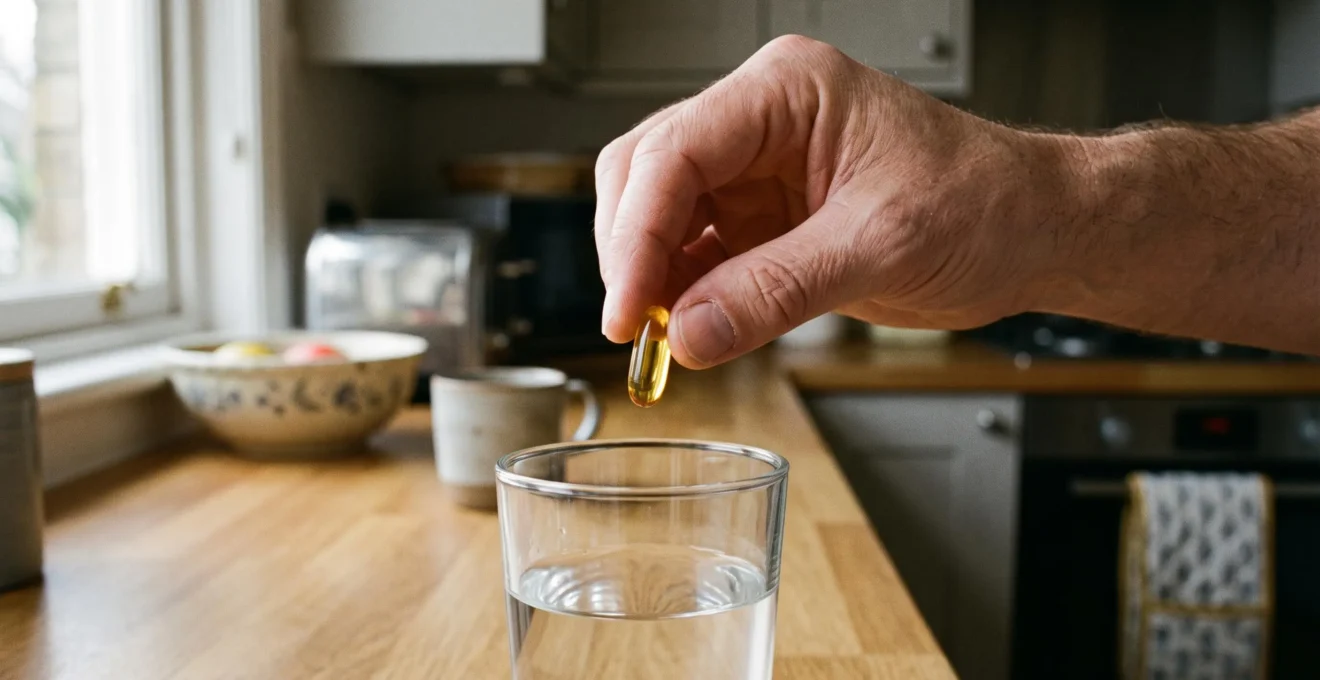
Swallowing a CBD product does more than deliver cannabidiol into the digestive system. Before much of the absorbed compound reaches the wider bloodstream, it encounters metabolic processes in the intestinal wall and liver. These processes can transform CBD into metabolites, changing both the amount of unchanged cannabidiol circulating in the body and the substances present alongside it.
This early transformation is known as first-pass metabolism. It helps explain why a swallowed capsule, an oil held beneath the tongue and an inhaled preparation can produce different patterns of systemic CBD exposure, even when their labels indicate similar CBD quantities.
The distinction is important, but it is not absolute. Absorption depends on formulation, food intake and physiology. Some intestinally absorbed CBD may also travel through lymphatic pathways rather than directly through the portal vein. Furthermore, avoiding some initial liver processing does not prevent subsequent metabolism.
Understanding these pathways provides a more reliable basis for interpreting CBD research than assuming that a particular delivery format always absorbs faster, produces stronger effects or requires a predictable dose.
CBD metabolism: the essential points
- Swallowed CBD undergoes digestive absorption and substantial first-pass metabolism, which can reduce the amount of unchanged CBD reaching systemic circulation.
- Sublingual and inhaled formats can avoid some early hepatic processing, but their actual exposure profiles depend on administration technique and formulation.
- Metabolism findings explain differences in exposure; they cannot establish an individual CBD dose or predict personal effects.
- Why Does the Liver Process Many Swallowed Compounds Before They Circulate More Widely?
- How Can You Separate Digestion, Absorption and Liver Metabolism When Reading CBD Research?
- Swallowed Capsule or Sublingual Oil: How Do Their Early Processing Pathways Differ?
- Why Should Liver Metabolism Data Not Be Used to Guess a Personal CBD Dose?
- When Does Hepatic Metabolism Matter Most When Comparing CBD Formats?
- How Does a CBD Softgel Move Through the Digestive System After Swallowing?
- Oral or Inhaled CBD: How Do Their Delivery Pathways Differ Before Circulation?
- How Do Hepatic Pathways Fit into the Processing of Oral CBD Products?
Why Does the Liver Process Many Swallowed Compounds Before They Circulate More Widely?
The liver processes many swallowed compounds before they circulate throughout the body because blood draining much of the digestive tract travels through the hepatic portal vein. This delivers absorbed substances to the liver, where enzymes can chemically transform them. For CBD, substantial first-pass metabolism means that some absorbed cannabidiol is converted into metabolites before reaching systemic circulation unchanged.
After a swallowed compound passes through the intestinal lining, a substantial proportion of the absorbed material ordinarily enters the portal blood supply. This blood reaches the liver before joining the wider circulation. Liver enzymes can modify the compound, making its subsequent handling and elimination different from that of the original substance.
First-pass metabolism is a normal physiological process, not evidence that a substance is necessarily harmful or toxic. Its extent depends on the compound’s chemistry, metabolic pathways and route of absorption.
For cannabidiol, the official EPIDIOLEX prescribing information identifies metabolism in both the liver and gut, primarily involving hepatic processes. CYP2C19 and CYP3A4 enzymes, alongside certain UDP-glucuronosyltransferase enzymes, participate in CBD metabolism.
Two identified metabolites are 7-hydroxy-cannabidiol (7-OH-CBD) and 7-carboxy-cannabidiol (7-COOH-CBD). These molecules are chemically distinct from the original CBD molecule, so measuring unchanged CBD alone does not describe the entire circulating metabolite profile.
There is an important qualification to the portal-vein model. CBD is highly lipophilic, meaning it has an affinity for fats. Some absorbed CBD may enter intestinal lymphatic transport pathways associated with dietary lipid processing, potentially reaching systemic circulation without the same immediate portal-liver passage.
A scientific review of CBD first-pass metabolism and lymphatic absorption discusses this interaction and its implications for oral formulations. It does not establish that every marketed CBD product uses lymphatic transport to the same extent.
Nor does extensive first-pass metabolism apply equally to all swallowed compounds or cannabinoids. The enzymes involved, the extent of transformation and the resulting metabolites can differ considerably.
Recognizing those exceptions makes the next distinction essential: a low blood concentration may reflect incomplete absorption, metabolic transformation or both.
How Can You Separate Digestion, Absorption and Liver Metabolism When Reading CBD Research?
CBD research becomes easier to interpret when digestion, intestinal absorption and hepatic metabolism are treated as separate processes. Digestion determines how the product releases and disperses CBD, absorption determines how much crosses biological barriers, and metabolism determines how absorbed CBD is transformed. A final blood concentration reflects several overlapping processes rather than liver activity alone.
These stages are closely connected but answer different scientific questions.
- Digestion and formulation processing: The product’s contents are released, mixed with digestive fluids and made available for potential uptake. CBD’s poor water solubility can make formulation and dietary conditions particularly relevant.
- Intestinal absorption: CBD crosses the intestinal lining and enters transport pathways. Not everything released from a capsule or edible necessarily becomes systemically available.
- Metabolic transformation: Enzymes in the gut and liver convert some absorbed CBD into metabolites. First-pass transformation occurs before initial systemic entry, while metabolism can continue afterward.
The stages should not be interpreted as perfectly isolated compartments. Intestinal metabolism can occur during absorption, and portal transport and lymphatic transport may contribute differently depending on physiological conditions.
Researchers often report bioavailability, maximum plasma concentration (Cmax) or area under the concentration-time curve (AUC). These measurements are useful, but they are not interchangeable.
Bioavailability describes the proportion of an administered dose reaching systemic circulation as the unchanged compound. Cmax identifies a measured peak concentration, while AUC represents overall exposure during the specified sampling interval. None independently reveals exactly how much CBD was lost at each digestive or metabolic stage.
A systematic review and meta-regression of CBD pharmacokinetics included 39 studies and 112 trial arms. It identified administration route, dose, formulation and feeding status as contributors to differences in pharmacokinetic outcomes.
39 studies, 112 trial arms
The systematic review covered human CBD pharmacokinetic investigations across oral, oromucosal, inhaled and intravenous administration. Differences in study design and quality limit direct comparisons between individual products and routes.
Pharmacokinetics of Cannabidiol: A Systematic Review and Meta-Regression Analysis.
A lower measured concentration of unchanged CBD after swallowing may indicate reduced systemic exposure to the parent compound. It does not, by itself, establish that the product has lower biological activity. Metabolite concentrations, the particular outcome being studied and the relationship between exposure and effects all matter.
Five checks for interpreting a CBD pharmacokinetic study
- Identify the administration route and record whether the product was swallowed, held in the mouth, inhaled or administered another way. Deliverable: a clearly labelled route.
- Record the formulation, dose and feeding conditions described by the researchers. Deliverable: a short study-conditions summary.
- Check whether the analysis measured unchanged CBD, named metabolites or both. Deliverable: a list of measured analytes.
- Identify the reported endpoint and sampling period, distinguishing Cmax, AUC and absolute bioavailability. Deliverable: one correctly labelled measurement.
- Examine whether the study separates absorption from metabolism or only reports their combined outcome. Deliverable: a written limitation on what the results can demonstrate.
It also provides a useful basis for evaluating the common comparison between a swallowed capsule and CBD oil used beneath the tongue.
Swallowed Capsule or Sublingual Oil: How Do Their Early Processing Pathways Differ?
A swallowed CBD capsule primarily follows the gastrointestinal route, involving digestive release, intestinal absorption and potential first-pass metabolism. Sublingual CBD oil may follow two routes: some CBD can cross the oral mucosa into systemic circulation, while the portion swallowed with saliva enters the digestive system. The distinction is therefore partial rather than an absolute separation.
With a swallowed capsule, CBD must first become available for absorption through gastrointestinal processing. Absorbed CBD may then enter portal blood and encounter the liver or, under suitable conditions, participate in intestinal lymphatic transport.
With sublingual administration, CBD oil is placed beneath the tongue, where dissolved CBD may cross the mucosal barrier into local blood vessels. This uptake route can avoid initial portal-liver passage for the portion successfully absorbed through the oral mucosa.
However, sublingual administration does not eliminate liver metabolism. Some oil can remain in the mouth, mix with saliva and eventually be swallowed. CBD that enters systemic circulation through the mucosa also remains subject to later metabolic clearance.
The amount absorbed through the oral mucosa depends on factors such as formulation, contact time and administration conditions. A product described commercially as sublingual is not necessarily supported by experimental evidence demonstrating a particular fraction absorbed through that route.
The systematic review discussed earlier found substantial variability in comparisons between oral and oromucosal CBD. Its pooled analysis was associated with lower Cmax and AUC measurements for oromucosal administration than for oral administration, rather than a consistent advantage for products placed in the mouth.
That finding should not be interpreted as a universal ranking. Oromucosal studies are not necessarily equivalent to strictly controlled sublingual administration, and the investigated preparations and administration conditions varied.
The early processing differences can be summarized without assuming a superior outcome.
| Processing feature | Swallowed capsule | Sublingual oil |
|---|---|---|
| Initial contact | Stomach and intestinal contents | Oral mucosa and saliva |
| Digestive involvement | Central to the delivery route | Relevant to the swallowed portion |
| Initial liver exposure | Common after portal absorption | Potentially reduced for mucosally absorbed CBD |
| Major variables | Food, formulation and intestinal uptake | Formulation, mucosal uptake and swallowed fraction |
| Later liver metabolism | Yes | Yes |
Neither route guarantees a fixed onset or duration. Such outcomes depend on more than whether part of the initial dose bypasses first-pass processing.
Those distinctions are especially important when metabolism measurements are misused to calculate a supposed personal CBD requirement.
Why Should Liver Metabolism Data Not Be Used to Guess a Personal CBD Dose?
Liver metabolism data cannot establish a personal CBD dose because they describe how compounds are processed under specific study conditions, not how much an individual should take. Enzyme activity, liver function, concurrent medications and product formulation can change exposure. Even accurate population-level measurements cannot reliably predict an individual’s response or determine an appropriate intake.
Pharmacokinetic research commonly reports average concentrations and variation across participants. These results are valuable for understanding how CBD behaves in the body, but an average does not represent a guaranteed response for any particular person.
Two people using similar preparations may experience different systemic exposures because of differences in absorption, hepatic metabolic activity and subsequent clearance.
Drug interactions add another layer of complexity. CBD is processed through enzyme systems that also handle many medications. Other substances can alter metabolic enzyme activity, while CBD itself can affect the processing or effects of certain concomitant medicines.
For example, EPIDIOLEX prescribing information documents interactions involving specific medications and shows that rifampin, an enzyme inducer, reduced CBD exposure under the studied conditions. This finding does not establish how every medication changes CBD exposure.
Liver function also matters. In a study described in the pharmaceutical prescribing information, moderate or severe hepatic impairment was associated with approximately 2.5- to 5.2-fold higher CBD AUC than normal hepatic function after a single 200 mg pharmaceutical CBD dose.
This comparison describes exposure under the study’s specific conditions. It is not a formula for adjusting consumer CBD products or a recommended dose.
Clinical pharmacology example: hepatic impairment and CBD exposure
Pharmaceutical cannabidiol was studied in participants with differing degrees of hepatic function, allowing investigators to compare exposure after a specified oral dose.
Moderate or severe hepatic impairment was associated with markedly higher CBD exposure. The result demonstrates why liver function can be a clinically relevant factor, but it does not provide a self-adjustment rule for CBD products outside the studied prescribing context.
Another common error is interpreting metabolite exposure ratios as percentages of a dose. For instance, the pharmaceutical label reports that 7-COOH-CBD AUC was approximately 40 times that of unchanged CBD after repeated dosing under specified conditions.
That does not mean 40 times more CBD was absorbed, that a specific percentage of the dose became this metabolite, or that the dose should be multiplied or divided by a corresponding amount. AUC is a measure of systemic exposure over time, influenced by both metabolite formation and elimination.
The transformation of a compound is not a dosage recommendation. Exposure measurements and clinical decisions answer fundamentally different questions.
Anyone using medication or living with a liver condition should seek appropriate professional guidance rather than deriving dose adjustments from comparative bioavailability or metabolite figures.
When Does Hepatic Metabolism Matter Most When Comparing CBD Formats?
Hepatic first-pass metabolism matters most when CBD formats use substantially different routes into systemic circulation. Swallowed products generally encounter intestinal and hepatic processing before wider distribution, while inhaled or successfully mucosally absorbed CBD can avoid some initial liver exposure. When comparing two swallowed products, formulation and absorption differences may be more informative than first-pass metabolism alone.
The clearest route-level distinction arises when comparing swallowed capsules or edibles with formats that can deliver CBD without gastrointestinal absorption.
In such comparisons, hepatic metabolism helps explain why identical labelled CBD amounts do not necessarily result in equal amounts of unchanged CBD reaching the bloodstream.
However, the liver is not the only source of variation. Differences in product composition, the fraction actually absorbed and the rate of entry into circulation can materially affect the results.
When comparing two swallowed products, both ordinarily face potential first-pass metabolism. That shared pathway means the liver may contribute less to explaining their differences than capsule disintegration, oil composition, meal conditions or intestinal absorption.
It would still be inaccurate to assume that their liver exposure is identical. Formulation-dependent changes in portal and lymphatic transport, together with differences in the rate of absorption, can alter how CBD reaches metabolic enzymes.
A practical comparison begins with three questions: Is the route of entry the same? Are the formulations sufficiently similar? Were the doses and study conditions comparable?
| Comparison | Role of initial hepatic metabolism | Additional factors to examine |
|---|---|---|
| Two similar swallowed capsules | Shared pathway; often not the main distinction | Release characteristics, carrier oil, food conditions |
| Swallowed capsule versus edible | Relevant to both | Food matrix, dispersion, intestinal absorption |
| Swallowed capsule versus sublingual oil | Potentially important difference | Mucosal absorption, swallowed fraction, formulation |
| Swallowed product versus inhaled CBD | Major structural pathway difference | Pulmonary delivery, actual deposited amount, safety considerations |
Another limitation concerns dose proportionality. Metabolic processes have finite capacities, and some compounds show nonlinear pharmacokinetics under certain conditions. However, this general principle does not prove that clinically meaningful hepatic enzyme saturation occurs at every CBD dose or for every product.
Changes in exposure across dose levels may also reflect absorption, formulation and other kinetic processes. Data from one dose range should not automatically be extrapolated to another using a fixed conversion factor.
Understanding the physical journey of a swallowed softgel makes those distinctions more concrete.
How Does a CBD Softgel Move Through the Digestive System After Swallowing?
A swallowed CBD softgel travels through the gastrointestinal tract, where its shell must release the oil-based contents before CBD can become available for absorption. Digestive fluids, bile and intestinal lipid-processing mechanisms influence how the contents disperse. Absorbed CBD may then enter portal blood or lymphatic transport pathways before systemic distribution and subsequent metabolism.
A typical immediate-release softgel consists of a capsule shell containing an oil-based formulation. After swallowing, the capsule reaches the stomach, where hydration and digestive conditions contribute to shell breakdown and release of its contents.
The precise release location and timing depend on the shell material and product design. A delayed-release preparation may behave differently from a conventional immediate-release softgel.
Once released, the oil interacts with gastrointestinal contents. As it passes toward and through the small intestine, bile components and digestive processes support the dispersion and handling of dietary lipids.
CBD’s lipophilic characteristics make these conditions particularly relevant. The compound does not dissolve readily in water, so the way it is carried and dispersed can influence its availability for absorption.
Food may change this process significantly. In a phase I clinical trial on cannabidiol pharmacokinetics and food effects, a high-fat breakfast increased peak CBD concentration approximately 4.85–fold and measured AUC exposure approximately 4.2-fold compared with fasting conditions.
4.2-fold higher AUC
In the trial’s food-effect arm, a high-fat meal increased measured CBD exposure after a 1500 mg dose of the tested highly purified oral pharmaceutical formulation. This is a study-specific finding, not a multiplier applicable to every softgel or a suggested consumer dose.
2018 phase I clinical pharmacokinetic trial of highly purified cannabidiol.
The study illustrates the importance of digestive conditions, but it did not establish that every CBD softgel responds to food in the same way. The mechanisms proposed by investigators included improved solubilization associated with bile secretion, while the final plasma exposure measurement reflected the combined outcome of several processes.
After intestinal uptake, the absorbed CBD enters transport pathways that connect digestion to systemic distribution. Much of the conventional explanation concerns portal delivery to the liver, but lipid-associated lymphatic transport may also contribute under certain conditions.
Product design can therefore matter at multiple stages. Shell composition affects release, carrier oil affects dispersion, and modified-release characteristics may alter where and when contents become available.
Two softgels with identical labelled CBD quantities should not be assumed to have identical absorption profiles simply because both are swallowed.
This gastrointestinal sequence contrasts sharply with pulmonary delivery, where CBD can enter the bloodstream without first passing through intestinal absorption.
Oral or Inhaled CBD: How Do Their Delivery Pathways Differ Before Circulation?
Swallowed CBD moves through the digestive tract and undergoes absorption and potential first-pass metabolism before entering systemic circulation. Inhaled CBD can pass from the lungs into pulmonary blood and then the wider circulation without first travelling through the intestinal portal-liver pathway. The routes differ in their initial entry processes, although both ultimately remain subject to metabolism and elimination.
Following inhalation, CBD delivered to the lungs may cross the pulmonary absorption barrier and reach the pulmonary circulation. Blood then travels through the heart before distribution to systemic tissues.
This avoids the specific gastrointestinal first-pass sequence associated with swallowed products. It does not mean inhaled CBD avoids the liver permanently.
Once CBD circulates systemically, the compound can undergo distribution into tissues and subsequent metabolic clearance, including hepatic transformation, regardless of its original administration route.
The distinction is between initial first-pass exposure and later metabolism, not between a route that uses the liver and a route that never does.
Absorption rates can also differ. The human pharmacokinetic systematic review described earlier found that inhalation generally produced faster absorption than oral administration in the studies examined.
However, faster absorption does not establish greater clinical effectiveness, a preferred duration or a universally predictable CBD exposure profile.
The delivered amount through inhalation can depend on the preparation, device, aerosol characteristics and inhalation conditions. Oral delivery presents different variables, including product formulation, meal composition and digestive physiology.
These distinctions should also be evaluated alongside route-specific practical considerations.
- Respiratory exposure: Inhalation introduces material into the respiratory tract, creating considerations absent from swallowed products.
- Digestive involvement: Swallowed products depend on gastrointestinal release and absorption but avoid direct pulmonary delivery.
- Timing: Inhaled and swallowed products can exhibit different concentration-time profiles without having a fixed universal onset or duration.
- Regulatory and product context: Applicable rules, product composition and quality requirements differ across jurisdictions and cannot be inferred from pharmacokinetics alone.
Published CBD exposure estimates vary across studies, making simple oral-to-inhaled bioavailability ratios unreliable when applied to different formulations or administration conditions.
Comparing routes therefore requires more than reading milligram labels or assuming that bypassing initial hepatic metabolism automatically creates a better outcome.
Once that distinction is established, the entire processing pathway can be assembled into one coherent explanation.
Key takeaways before connecting the pathways
- When comparing CBD formats, distinguish the amount administered from the amount of unchanged CBD entering systemic circulation.
- Consider gut metabolism, portal transport and possible lymphatic uptake rather than treating the liver as a single unavoidable entry checkpoint.
- Keep early first-pass processing separate from later clearance, especially when evaluating timing, exposure and potential medication interactions.
How Do Hepatic Pathways Fit into the Processing of Oral CBD Products?
Hepatic pathways fit into oral CBD processing at two different stages: early metabolism associated with gastrointestinal absorption and later metabolism during systemic clearance. Swallowed CBD may be released, absorbed and transported toward the liver, where enzymes transform part of it into metabolites. CBD and its metabolites can then circulate, undergo further processing and eventually be eliminated.
The complete sequence begins with the product rather than the liver. A capsule, softgel, oil or edible must first make CBD available in the gastrointestinal environment.
Intestinal uptake follows, subject to the compound’s solubility, formulation and physiological conditions. Portal absorption can deliver CBD to the liver before its initial entry into systemic circulation, while some lipid-associated intestinal absorption may potentially involve lymphatic transport.
Within the liver, metabolic enzymes modify the chemical structure of CBD. Identified products of this transformation include 7-OH-CBD and 7-COOH-CBD, which have pharmacokinetic properties distinct from the parent molecule.
The resulting systemic exposure therefore involves more than one substance. Measuring unchanged CBD alone describes one part of the circulating profile, while metabolite measurements offer additional information about transformation and elimination.
Importantly, systemic entry does not mark the end of hepatic processing. CBD that is already circulating may reach the liver again, undergo further metabolism and contribute to pathways leading to elimination.
This separates two concepts that are often grouped together under the phrase hepatic metabolism:
- First-pass metabolism: Transformation occurring before a compound initially reaches systemic circulation, particularly through intestinal and hepatic processes.
- Subsequent metabolic clearance: Continuing transformation after systemic entry, contributing to the compound’s concentration-time profile and eventual elimination.
These mechanisms provide a useful way to compare CBD formats without assuming that their pathways are entirely separate.
| CBD format | Initial hepatic first-pass exposure | Subsequent hepatic metabolism |
|---|---|---|
| Swallowed capsules and edibles | Generally substantial potential after portal absorption; lymphatic transport may modify exposure | Present |
| Sublingual or oromucosal oil | Possible for the swallowed portion; reduced for material absorbed directly through oral mucosa | Present |
| Inhaled CBD | Avoids gastrointestinal hepatic first-pass exposure for CBD absorbed through the lungs | Present |
The table describes physiological routes rather than verified percentages of absorption for particular commercial preparations. The actual contribution of each route depends on the product and administration conditions.
Current human pharmacokinetic evidence also has limitations. Studies vary in their formulations, populations, analytical methods and sampling procedures. Consequently, there is no single universal equation that converts a labelled CBD quantity into a predictable circulating concentration for every person.
The main lesson is therefore more precise than the statement that swallowed CBD is processed by the liver: digestion determines availability, absorption determines entry, and metabolism changes the chemical profile and subsequent exposure.
When evaluating a CBD product or a scientific claim, identify the actual delivery route, examine what the research measured and distinguish early metabolism from later clearance. For personal safety questions involving medications, liver conditions or dose changes, use that understanding to inform a discussion with a qualified healthcare professional rather than attempting to calculate an intake from pharmacokinetic data.
Does first-pass metabolism mean that most swallowed CBD is destroyed?
No. First-pass metabolism refers to chemical transformation before initial systemic entry, not simply destruction. Some absorbed CBD is converted into metabolites, while incomplete absorption can separately reduce the amount of unchanged CBD available in circulation. The proportion involved depends on conditions and cannot be determined from a general statement about the liver.
Can CBD metabolites remain in the bloodstream after unchanged CBD concentrations decline?
Yes. CBD metabolites have their own formation and elimination profiles, which can differ from those of unchanged CBD. Pharmaceutical CBD research has documented substantial systemic exposure to 7-COOH-CBD. However, the presence of a metabolite does not by itself establish a particular clinical effect or duration of action.
Does taking CBD with food change how the liver metabolizes it?
Food can change CBD exposure through effects on gastrointestinal processing and absorption. A clinical study of highly purified oral CBD found markedly increased systemic exposure under high-fat fed conditions. That result does not isolate a change in liver enzyme activity, nor does it predict the food effect for every CBD formulation.
Does avoiding first-pass metabolism eliminate the possibility of CBD drug interactions?
No. Avoiding part of the initial hepatic first-pass pathway does not prevent CBD from being metabolized after entering systemic circulation. Potential interactions can still be relevant, and their significance depends on the medications, exposures and clinical circumstances involved. A healthcare professional should assess medication-specific risks.
Can blood tests establish exactly how much of a swallowed CBD product was absorbed?
A blood concentration measurement alone cannot establish the exact absorbed fraction of a swallowed dose. Concentrations reflect absorption, distribution and elimination, including metabolic transformation. Estimating absolute bioavailability requires appropriate pharmacokinetic study design and reference measurements, rather than a single plasma sample or a comparison with the product label.