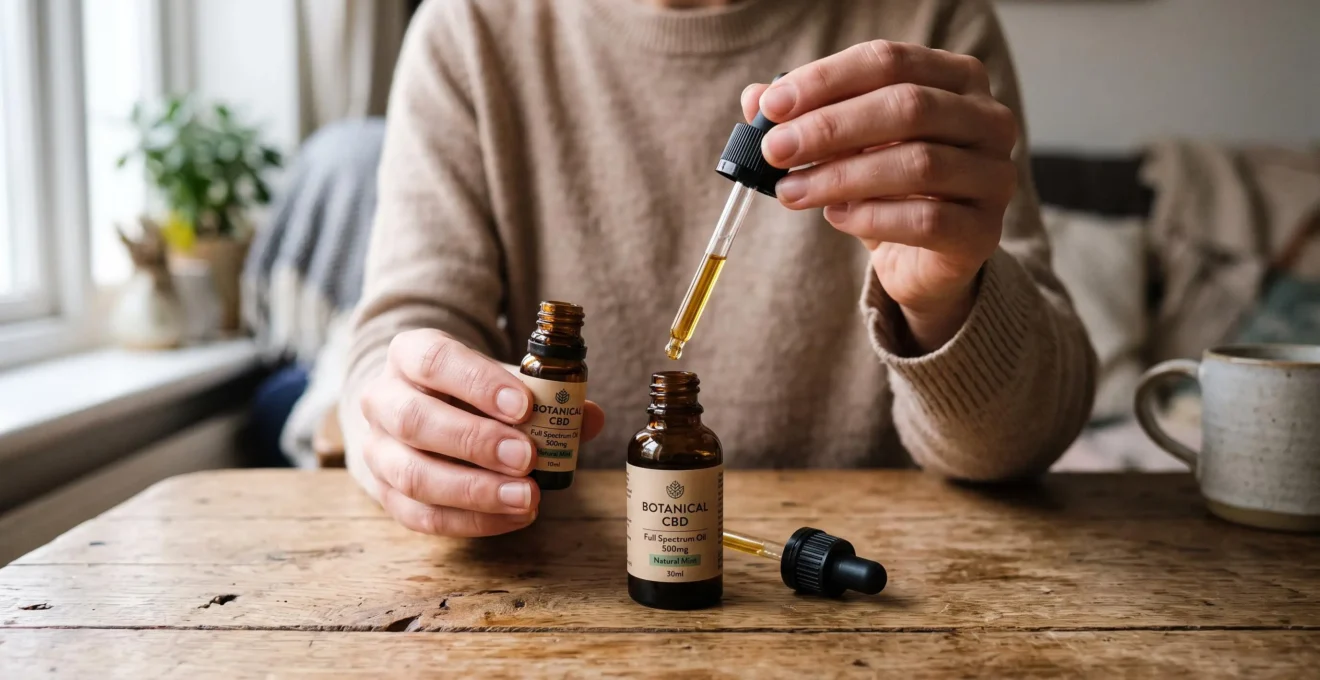
Amber glass vials are commonly used for CBD oils and botanical extracts because their tinted walls reduce the amount of ultraviolet and short-wavelength visible light reaching the contents. This matters for formulations containing cannabinoids, aromatic plant compounds and oils that may undergo chemical changes during storage.
Unlike clear glass, amber glass provides a built-in light-filtering barrier without completely hiding the liquid. Users can still observe the approximate fill level and appearance of the oil, while a suitable dropper or dispensing closure allows controlled everyday use.
However, amber glass protects against light, not every cause of deterioration. Oxygen exposure, temperature, closure integrity and handling habits also influence storage conditions. Even a high-quality amber vial can perform poorly when left in direct sunlight, repeatedly opened unnecessarily or fitted with a damaged seal.
Choosing appropriate packaging therefore involves more than looking at bottle color. The most useful approach combines light protection, reliable dispensing, clean handling and a suitable storage location.
Amber CBD Glass Bottles: The Essentials
- Amber glass filters much of the UV and some visible light that can contribute to CBD oil degradation, but does not provide complete light protection.
- The dropper, cap and seal matter as much as the bottle when evaluating hygiene, air exposure and repeated daily use.
- Keep CBD oil tightly closed in a cool, dark and stable location, preferably inside its original outer packaging.
- Why Does Amber Glass Protect CBD Oil Better Than Clear Glass from Light?
- How Can You Check Whether an Amber CBD Bottle Is Suitable for Repeated Daily Use?
- Amber Glass or Opaque Bottle: Which Better Balances Protection and Ease of Use?
- Which Amber-Vial Handling Mistakes Can Shorten a CBD Oil’s Usable Life?
- Where Should You Keep an Amber CBD Bottle After Opening It?
- Why Can UV Light Accelerate Changes in Botanical CBD Formulations?
- How Can You Evaluate Whether CBD Packaging Supports Long-Term Extract Stability?
- How Can You Protect Extract Integrity from Production to Everyday Storage?
Why Does Amber Glass Protect CBD Oil Better Than Clear Glass from Light?
Amber glass protects CBD oil better than clear glass under comparable lighting conditions because its color-producing components absorb much of the ultraviolet radiation and some short-wavelength visible light before these wavelengths reach the liquid. This reduces potentially damaging light exposure, although the level of protection depends on the glass composition, thickness, surrounding light and storage duration.
Conventional amber glass obtains its optical properties from selected components incorporated into the glass matrix. Depending on the formulation, these may include iron-containing compounds and other color-modifying constituents. Sulfur-containing chemistry is also used in certain amber-glass manufacturing processes. The resulting coloration changes which wavelengths pass through the container.
This is a selective filtering mechanism, not an absolute barrier. Some visible light continues to penetrate the vial, allowing users to inspect the liquid. The precise transmission profile varies between products.
Research on light transmission through pharmaceutical glass vials, published in Advanced Materials Technologies in 2025, explains how glass composition influences protection against ultraviolet and visible wavelengths. Although the research focuses on pharmaceutical packaging rather than commercial CBD products, its optical principles help explain the protective role of amber glass.
The practical importance becomes clearer when comparing bottles exposed to light. Light can contribute to changes in the molecular composition of CBD formulations, potentially affecting cannabinoid concentration and visible appearance. Carrier oils and additional botanical ingredients may also undergo changes depending on their composition.
12.93% vs 36.81%
In a 2026 laboratory study of 3% CBD isolate in MCT oil, reported CBD losses after approximately six months of light exposure were 12.93% in amber vials and 36.81% in clear vials. These are results for the tested formulation and conditions, not universal CBD shelf-life estimates.
2026 experimental study on CBD oil storage stability, published in Industrial Crops and Products.
Visual changes may include increasing yellow coloration, altered clarity or shifts in the oil’s appearance. Changes in smell or taste can also suggest deterioration in some formulations, although they do not identify which compounds have changed. Importantly, appearance cannot reliably quantify CBD potency or establish product safety.
Amber glass therefore offers meaningful protection compared with clear glass under light exposure, but a bottle placed near a sunny window may still receive far more light than one kept inside a closed cupboard.
Light protection is only part of preserving CBD oil. Even an effective amber barrier cannot compensate for excessive heat, air exposure or a poorly maintained closure, making the bottle’s daily-use design equally important.
How Can You Check Whether an Amber CBD Bottle Is Suitable for Repeated Daily Use?
An amber CBD bottle is suitable for repeated daily use when its dispensing mechanism works consistently, the closure reseals securely and the materials contacting the oil remain intact and compatible with the formulation. A practical inspection should cover the pipette or pump, cap threads, seal condition, neck residue and evidence of leakage or wear.
Start with the dispensing system. A glass dropper should be free of chips or cracks, and its bulb should draw and release liquid predictably. A pump should operate smoothly without unexpected dripping or sticking. Neither mechanism guarantees an accurate dose by itself: the manufacturer must validate dosing performance, particularly when volume markings are provided.
Next, inspect the closure. The cap should engage the threads without excessive force, close evenly and remain secure during normal handling. Visible cracks, deformation or persistent leakage indicate that the bottle may no longer be dependable for everyday storage.
Material compatibility matters. Glass pipettes generally offer a chemically resistant liquid-contact surface, while plastic pipettes vary in composition and suitability. A plastic component should not automatically be considered unsafe, nor a glass pipette automatically superior: compatibility depends on the actual materials and finished formulation. Rubber bulbs, seals and other closure components also deserve consideration.
Every opening allows some air exchange, while contact between the dispenser and external surfaces can introduce contamination. Avoid touching the pipette tip to the mouth, tongue, fingers or countertop before returning it to the bottle.
Before choosing a daily-use container, consider:
- Opening frequency: A repeatedly opened bottle needs a reliable, easy-to-close dispensing system.
- Bottle volume: A size that can be consumed within the labeled use period may be preferable to an unnecessarily large bottle.
- Travel conditions: A secure closure and protective outer case reduce leakage and breakage risks.
- Resealing performance: A cap that regularly leaks or fails to close fully is unsuitable for prolonged use.
- Number of users: Shared droppers create additional hygiene concerns, particularly when users place them near their mouths.
A bottle intended for longer storage may benefit from remaining unopened until needed, while a smaller daily-use container may be more convenient for routine dispensing. Decanting should not be treated as automatically beneficial because transferring oil can introduce light, oxygen and contamination.
If the seal, dispenser or bottle is damaged, replacing the complete product through an appropriate supplier is generally more dependable than improvising an unverified closure. Once a bottle passes these checks, the next decision is whether amber glass offers the right balance of protection and visibility for its intended use.
Amber Glass or Opaque Bottle: Which Better Balances Protection and Ease of Use?
An opaque bottle can provide stronger light protection than amber glass when its walls and closure effectively prevent light transmission. Amber glass, however, offers a useful compromise for everyday CBD oil dispensing because users can retain some visibility of the contents. The better choice depends on light exposure, closure design, dispensing requirements and storage duration.
Fully opaque containers remove much of the uncertainty associated with light passing through transparent materials. Yet light blocking does not automatically establish better overall storage performance: oxygen permeability, chemical compatibility and seal quality remain important.
For comparison, the table assumes an amber glass dropper bottle and an otherwise suitable opaque dispensing container. Actual performance must be checked for the specific products.
| Evaluation criterion | Amber glass bottle | Opaque bottle |
|---|---|---|
| Light protection | Filters much UV and some visible light; not complete | Can block light completely if the entire container is sufficiently opaque |
| Remaining volume visibility | Some visibility, depending on glass darkness | Usually requires an external level indicator or opening the container |
| Oil color and clarity checks | Partial visual inspection possible | Typically requires dispensing a sample or opening the package |
| Dosing precision | Depends on dropper or pump calibration | Depends on the selected dispensing mechanism |
| Reseal and oxygen protection | Glass is gas-impermeable; closure quality remains critical | Depends on wall material and closure design |
| Weight and breakage | Relatively heavy and breakable | Varies widely between metal, coated glass and plastic designs |
| Daily convenience | Useful for visible liquid dispensing | Useful where maximum light shielding is prioritized |
The trade-off is particularly important for consumers who check the oil’s appearance. Amber glass permits some observation of the liquid, while a fully opaque container prevents direct visual inspection without removing or dispensing the contents. That visibility is convenient, but it is not a substitute for laboratory quality testing.
For products expected to remain unopened for longer periods, an opaque package with a compatible, reliable seal may be attractive. For regularly used CBD drops, an amber bottle with a well-designed dispensing closure can be easier to handle.
A useful middle ground is secondary light protection: keep the amber vial in its original cardboard box or an opaque storage container, then remove it briefly for dispensing. This maintains convenient visual access while limiting unnecessary light exposure between uses.
Packaging research summarized by the University of California, Davis in its information on olive oil packaging supports the broader principle that dark and opaque oil containers limit light exposure, while oxygen control also influences preservation. This is evidence about olive oil packaging, not a direct CBD bottle comparison.
For many users, an amber vial stored inside an opaque box offers a sensible combination of protection and usability. Whatever the packaging format, however, careless handling can still undermine its protective advantages.
Which Amber-Vial Handling Mistakes Can Shorten a CBD Oil’s Usable Life?
The most avoidable mistakes are contaminating the dropper, leaving the bottle open unnecessarily, exposing it to heat or strong light, and allowing oil residue to interfere with the closure. These habits can compromise the condition of the formulation or its container even when the amber glass itself remains intact and continues filtering light.
Touching the dropper to the mouth or tongue is a particularly important hygiene concern. Returning a contacted pipette to the bottle creates a possible route for saliva or microorganisms to enter the remaining oil. Amber glass offers no protection against this type of contamination.
For repeated liquid dispensing, the U.S. National Library of Medicine‘s MedlinePlus guidance advises avoiding contact between a medication dropper and surrounding surfaces. Although that guidance specifically concerns eye drops, the general precaution of preventing external contact is relevant when handling CBD oil dispensers.
Another common error is treating an amber bottle as safe to leave in sunlight. Every period of exposure contributes to the total light dose reaching the formulation. Repeatedly placing the bottle near a bright window or under intense artificial lighting works against the purpose of tinted packaging.
Unnecessary opening also increases opportunities for air exchange. The exact impact depends on formulation, headspace, opening frequency and closure design; it cannot be converted into a universal number of lost shelf-life days.
Heat-related mistakes are equally significant:
- Leaving a bottle in a parked car during warm weather.
- Keeping it near a radiator, oven or other heat-producing appliance.
- Storing it in a bathroom exposed to repeated temperature and humidity changes.
- Carrying it in a pocket or bag exposed to sustained direct sunlight.
Finally, oil collecting around the neck and threads may interfere with secure closure. Residue can attract dirt, become difficult to remove and complicate inspection of the seal. Keep the exterior neck clean according to the product’s handling instructions, without introducing water, cleaning agents or cloth fibers into the oil.
Store the bottle upright where its design calls for it, especially when a dropper closure may leak if left on its side. Avoid transferring the liquid into an unverified container simply to make it more portable.
A brief accidental exposure to less-than-ideal conditions does not necessarily mean the oil has deteriorated beyond use. The more useful response is to limit further exposure, check the product’s condition and return it to a suitable storage location.
Where Should You Keep an Amber CBD Bottle After Opening It?
After opening, keep an amber CBD bottle tightly closed in a cool, dark location with a relatively stable temperature. A closed cupboard or drawer away from windows, heating appliances and moisture is usually a better everyday choice than an exposed countertop. Follow any more specific storage conditions supplied by the manufacturer.
A practical storage hierarchy begins with a closed interior cupboard, away from the kitchen stove or other heat sources. A drawer in a temperature-stable room is another useful option. An open shelf outside direct sunlight is less protective because ambient light and temperature changes may still reach the bottle.
Keeping the original cardboard box adds a second physical light barrier. It can also shield the bottle from casual knocks, although a cardboard box does not provide meaningful insulation against prolonged high temperatures.
Refrigeration requires a more careful decision. Low temperatures can slow some chemical deterioration processes, but certain carrier oils become more viscous when cold. This may make dispensing through a dropper more difficult and affect consistency between doses. Temperature transitions can also produce external condensation.
In the 2026 experimental CBD-in-MCT study discussed earlier, storage at 4°C and -18°C did not produce statistically significant CBD degradation during the reported experimental period. This does not establish refrigeration or freezing as the correct treatment for every commercial formulation, nor does it demonstrate that all bottles and closures tolerate freezing.
For travel, keep the bottle in protective packaging and avoid prolonged exposure to hot vehicles or direct sunlight. If the bottle must temporarily remain in a bathroom or other imperfect location, minimize the exposure and return it to normal storage afterward.
Five Actions for Better Opened-Bottle Storage
- Choose a storage spot: Identify one closed cupboard or drawer away from windows and heating appliances. The result is a consistent designated location.
- Check the closure: Inspect the cap, threads and dropper for visible damage or leakage. The result is a bottle with an intact, properly closing dispensing system.
- Retain the outer box: Place the vial back inside its original protective packaging after use. The result is a second light barrier between dispensing sessions.
- Record the opening date: Note the date on the outer box without covering batch, expiry or safety information. The result is a reference for following the manufacturer’s opened-product guidance.
- Establish an inspection baseline: Observe the oil’s normal color, clarity and aroma when first opened. The result is a reference for noticing subsequent changes, not a substitute for safety testing.
Any product-specific refrigeration instruction should take precedence over a general room-temperature recommendation. Keep all CBD products securely out of the reach of children and pets, regardless of the storage location chosen.
Once the bottle is kept cool, dark and securely closed, the remaining question is how strongly light-sensitive the formulation itself may be. Botanical extracts can behave differently from simple CBD isolate solutions because they contain additional compounds.
Why Can UV Light Accelerate Changes in Botanical CBD Formulations?
UV light can accelerate changes in botanical CBD formulations because certain molecules absorb light energy that may initiate chemical reactions, including oxidation and other photochemical transformations. Cannabinoids, aromatic compounds and carrier oils do not necessarily respond identically. The extent of change depends on the ingredients, wavelength, exposure intensity, oxygen availability and storage temperature.
Light-induced chemical change begins when a light-sensitive molecule absorbs sufficient energy to enter a more reactive state. Depending on its molecular structure and surrounding environment, the molecule may undergo transformation directly or participate in reactions involving oxygen or other formulation components.
CBD is one component of the mixture, but it is not always the only ingredient worth protecting. Botanical formulations may contain terpenes and other plant-derived constituents that contribute to their characteristic aroma, flavor and appearance.
These components can have different sensitivities. A formulation may therefore experience changes in its aromatic profile even when visible changes are modest, or show discoloration without a proportionate change in every constituent.
Carrier-oil stability also matters. Hemp seed oil, olive oil, MCT oil and other carriers have different fatty-acid compositions and oxidation characteristics. Oils containing more oxidation-susceptible unsaturated components may respond differently from relatively stable carrier systems.
The University of California, Davis packaging information discussed earlier explains how light exposure and oxygen contribute to the deterioration of olive oil. This supports the broader relevance of protecting susceptible oil carriers, although it cannot establish identical behavior for CBD in MCT oil or every botanical formulation.
It is also important not to misinterpret the 2026 CBD-in-MCT experiment. In that study, CBD-free MCT oil did not show significant discoloration under the tested conditions. The observed discoloration in CBD-containing samples was therefore not primarily explained by the carrier oil alone.
Full-spectrum botanical extracts present additional complexity because they contain more chemical constituents than an isolated CBD preparation. That wider composition creates more possible pathways for changes in appearance, aroma and chemical profile, but does not prove that every full-spectrum product degrades faster than every isolate formulation.
In practical terms, monitor unexpected changes in color, smell, clarity and consistency. These observations may justify contacting the manufacturer or discontinuing use when deterioration is suspected; they cannot establish cannabinoid potency or microbiological safety.
The sensitivity of a complex extract makes packaging evaluation more meaningful. The objective is not simply to select dark glass, but to assess whether the complete bottle and closure system is appropriate for preserving a particular formulation.
How Can You Evaluate Whether CBD Packaging Supports Long-Term Extract Stability?
To evaluate CBD packaging for long-term stability, examine four factors together: light filtration, closure integrity, compatibility between the formulation and packaging materials, and resistance to physical damage. Then review the manufacturer’s storage instructions, batch information, expiry details and tamper-evident features. No single packaging characteristic independently proves that an extract will remain stable.
The first variable is light protection. Amber glass provides selective filtering, while properly designed opaque packaging may prevent visible light from reaching the contents. A manufacturer’s transmission specifications can provide stronger evidence than bottle color alone, although such information is not always available on consumer packaging.
The second variable is closure performance. Glass walls provide an effective barrier to gas transmission, but the cap, liner, pipette assembly or dispensing mechanism may permit air entry. Check whether the bottle closes reliably and whether its closure materials have been selected for the intended formulation.
The third variable is material compatibility. The bottle, pipette, bulb, seal and any lining may contact the oil directly or indirectly. Appropriate materials should not adversely interact with the formulation under expected storage and use conditions. A glass bottle does not eliminate the need to assess polymer and elastomer components in its dispensing assembly.
The fourth variable is physical durability. Glass can crack or chip, especially during transport. A protective carton, secure fitment and suitable shipping configuration help reduce mechanical damage, but shipping protection is not the same as shelf-life protection.
Packaging and labeling also provide useful quality signals:
- Batch identification: Supports traceability to a particular production lot.
- Expiry or best-before information: Communicates a producer-defined period, whose meaning and support should be checked against the product’s documentation.
- Storage instructions: Indicate the conditions under which the manufacturer expects the product to be kept.
- Tamper-evident features: Help users identify possible interference before first opening, without proving formulation stability.
- Closure design: Provides clues about how the producer addresses dispensing and air exposure.
For an ongoing assessment after opening, compare the product’s appearance and aroma with its initial condition. Unexpected yellowing, cloudiness, phase separation or an altered smell may merit further investigation. However, some botanical formulations have naturally variable colors and consistencies, so changes must be interpreted in the context of the actual product.
The 2026 experimental research reported an inverse correlation of -0.79 between increasing yellow coloration and CBD concentration under its tested conditions. This shows why color can be informative in a controlled formulation, but it cannot be used to calculate the remaining CBD in a commercial bottle.
Reliable shelf-life claims require appropriate formulation-specific stability evidence. Neither the presence of amber glass nor the absence of visible changes provides that evidence on its own.
When comparing products, prioritize clear storage instructions, identifiable batches and dependable dispensing systems alongside light protection. These indicators provide a stronger basis for a purchasing decision than assuming a particular bottle color guarantees product longevity.
Key Takeaways Before Choosing Your Storage Routine
- Protection is cumulative: Evaluate light filtration, oxygen exposure, material compatibility and temperature together, rather than relying on a single packaging feature.
- Evidence has limits: Laboratory stability findings apply to tested formulations and conditions; visible appearance alone cannot establish the remaining CBD concentration.
- Responsibility changes along the supply chain: Producers control formulation and filling, distributors influence transport conditions, and consumers control much of the final storage and dispensing environment.
How Can You Protect Extract Integrity from Production to Everyday Storage?
Protecting CBD extract integrity requires consistent control from production through everyday use. Appropriate formulation and filling practices establish the starting quality, while packaging, transport, storage and dispensing influence what happens afterward. Consumers cannot verify every earlier condition, but they can choose transparent suppliers, follow storage instructions and reduce unnecessary exposure to light, heat, oxygen and contamination.
The integrity chain begins before the oil reaches its bottle. Extraction processes, formulation ingredients, filling conditions and packaging selection all affect the finished product. These operations are primarily controlled by the manufacturer rather than the end user.
Once the bottle is filled, protective performance depends on the interaction between the liquid and its immediate container. An amber glass vial helps reduce light transmission; an appropriate seal limits uncontrolled exposure; and compatible dispensing components support routine use.
Transport introduces a different set of variables. Packaging may experience temperature fluctuations, vibration, impacts and periods of exposure during distribution. A sturdy outer carton can reduce some physical risks, but consumers generally cannot reconstruct the full shipping history from the bottle alone.
Product labeling and supplier transparency therefore become important. Batch details, stated storage conditions, traceability information and accessible product documentation provide practical ways to assess the producer’s approach without claiming to independently confirm everything that occurred before purchase.
After opening, the consumer has greater influence over daily conditions. An effective routine can be kept straightforward:
- Use the original compatible container and avoid unnecessary decanting.
- Keep the bottle inside an opaque box, drawer or cupboard when not dispensing.
- Open it only as needed and close it promptly afterward.
- Avoid contact between the dispensing tip and the mouth or surrounding surfaces.
- Inspect the closure and monitor unusual changes in the oil’s appearance or aroma.
- Follow the manufacturer’s expiry, opened-product and storage instructions.
These habits reduce avoidable exposure, but do not guarantee a fixed shelf life. The suitability of a product remains dependent on the actual formulation, its validated stability and the conditions it experiences.
For purchasing decisions, look beyond attractive packaging. A reliable bottle should combine suitable light protection with a practical closure, readable product information and a design appropriate to expected consumption frequency.
Before the next purchase, compare the bottle material, dispensing system and manufacturer’s storage guidance. For a bottle already in use, identify one cool, dark storage location and maintain consistent handling practices. Protecting CBD oil is less about finding a single perfect container than about avoiding preventable deterioration throughout its usable life.
Does amber glass make CBD oil last longer automatically?
No. Amber glass can reduce light-related degradation compared with clear glass under similar exposure conditions, but the actual usable life also depends on the formulation, temperature, oxygen exposure, closure integrity and manufacturer-validated stability period. Amber glass alone does not establish a specific expiration date.
Can you tell whether CBD oil has lost potency by looking at its color?
Not reliably. The 2026 experimental CBD-in-MCT study identified an association between increasing yellow coloration and CBD loss under controlled conditions. However, color cannot establish the remaining cannabinoid concentration or product safety. Reliable potency assessment requires suitable analytical testing.
Is it better to transfer CBD oil into a smaller bottle after opening?
Not necessarily. A smaller container might reduce headspace in some circumstances, but transferring oil also introduces handling, oxygen exposure and possible contamination. Unless the manufacturer provides suitable transfer instructions and compatible containers, retaining the original bottle is generally the more practical approach.
Should CBD oil be discarded immediately after brief sunlight exposure?
Brief exposure does not automatically establish that a CBD oil has become unsuitable for use. The effect depends on light intensity, duration, temperature and formulation. Return the bottle to appropriate storage and follow the manufacturer’s guidance. If substantial heat exposure, contamination or unexpected changes raise concerns, seek product-specific advice rather than relying on appearance alone.
Can an amber CBD bottle be reused for another extract?
Reusing a bottle creates questions about cleaning effectiveness, residual ingredients, container compatibility and dispenser condition. A bottle that previously contained CBD oil is not automatically suitable for a different formulation. For products intended for consumption, a new, appropriately prepared container with verified material compatibility is generally preferable to an improvised reuse process.