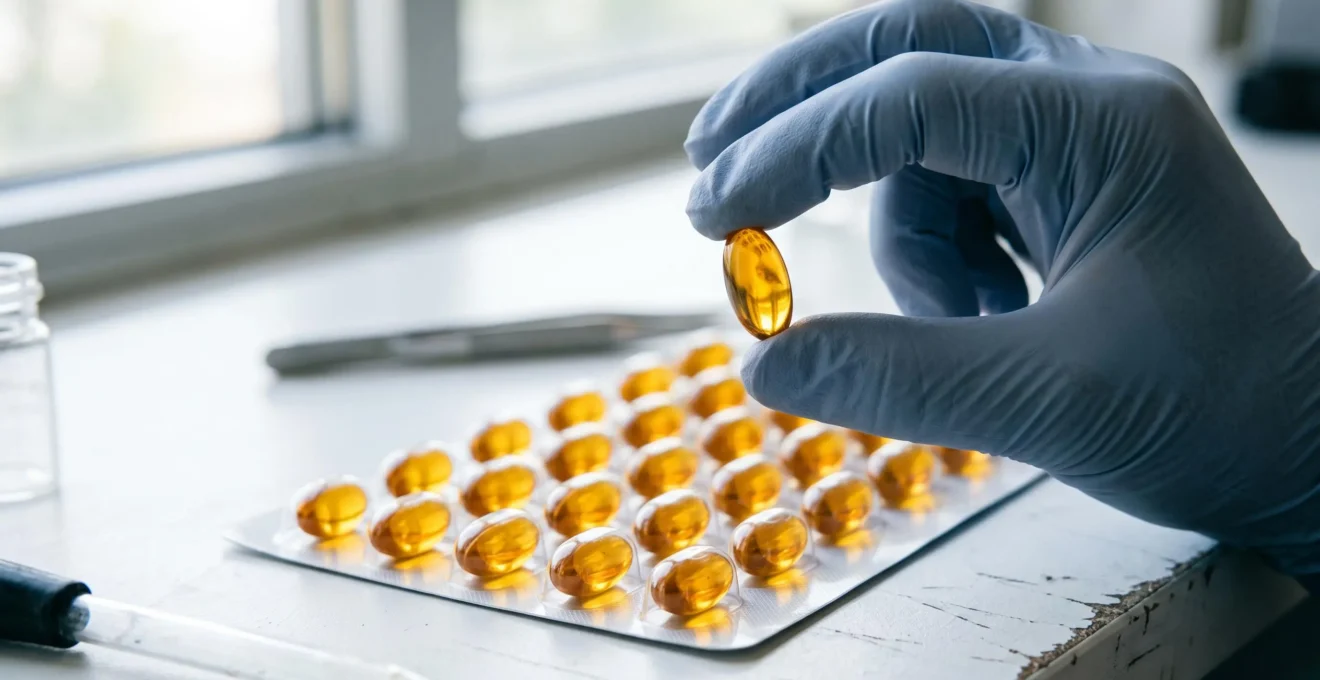
Gelatin shells turn liquid CBD formulations into convenient, individually sealed capsules. Their primary function is to contain a pre-measured amount of oil, limit direct exposure to the surrounding environment, mask the oil’s characteristic taste and release the contents after the shell dissolves in the digestive tract.
This makes gelatin particularly useful for CBD and other oil-soluble ingredients that are difficult to handle as loose liquids. Instead of measuring drops each time, consumers can take a capsule containing a specified amount of CBD, provided the product has been manufactured and tested appropriately.
However, a gelatin shell is not an airtight, lightproof or enteric barrier by default. Its protective properties depend on formulation, packaging and storage conditions. Furthermore, releasing CBD from a capsule is not equivalent to absorbing it: digestive processes, food intake and the oil formulation all affect how much CBD becomes available to the body.
Understanding these distinctions helps consumers evaluate capsule quality, identify damage, choose suitable shell materials and establish realistic expectations about oral CBD products.
CBD gelatin capsules: key facts
- Protection and convenience: gelatin softgels contain a measured quantity of CBD oil, reduce handling and mask its taste, but still require suitable packaging.
- Shell condition matters: heat, humidity and inappropriate storage can cause sticking, deformation, cracking or leakage.
- Dissolution is only the first step: CBD must undergo additional digestive processing before absorption, so shell dissolution alone does not determine bioavailability.
- Why Can a Gelatin Capsule Protect CBD Oil Before Dissolving in the Digestive Tract?
- How Can You Check CBD Softgels for Damaged or Deformed Gelatin Shells?
- Gelatin or Plant-Based Capsule Shell: Which Better Matches Your Dietary Preference?
- Which Storage Mistakes Can Damage CBD Gelatin Capsules Before Use?
- When Should You Avoid Using a CBD Softgel with a Damaged Shell?
- Why Do Sensitive CBD Ingredients Need Protection from Air, Moisture and Light?
- Why Does a CBD Capsule Still Need Further Processing After Its Shell Dissolves?
- How Does Encapsulation Protect Sensitive Compounds Inside CBD Softgels?
Why Can a Gelatin Capsule Protect CBD Oil Before Dissolving in the Digestive Tract?
A gelatin capsule protects CBD oil by enclosing it within a flexible, water-soluble shell until digestive fluids cause that shell to soften, rupture or dissolve. This separation makes the oil easier to handle, reduces direct contact with the mouth and provides a pre-measured serving. However, ordinary gelatin softgels do not guarantee release specifically in the small intestine.
A softgel typically consists of gelatin, water, plasticizers and other formulation-dependent ingredients surrounding a liquid or semisolid filling. Gelatin forms a cohesive film that can accommodate an oil-based CBD formulation without requiring consumers to measure the liquid themselves.
A scientific review of soft gelatin capsule formulation and stability explains how shell composition, manufacturing conditions and interactions with the filling determine the mechanical properties and performance of finished softgels.
Mechanical protection is the first function. The shell contains the liquid, limits direct handling and provides a physical separation between the CBD oil and its immediate surroundings. Nevertheless, the gelatin film is not completely impermeable to environmental gases or moisture, and a transparent shell cannot be assumed to block light.
The second function is related to administration. Because the oil remains enclosed while the capsule is swallowed, its taste is largely masked and direct contact with the mouth is reduced. This is a sensory advantage, not evidence of superior pharmacological activity.
Standard gelatin capsules generally begin interacting with gastrointestinal fluids after swallowing, often releasing their contents in the stomach. Gastric conditions, shell formulation, meal composition and stomach-emptying patterns influence the timing. A specially engineered delayed-release or enteric system would be required to make more specific claims about intestinal release.
Pre-measured dosing offers another practical benefit. If a manufacturer produces and verifies a capsule containing a stated amount of CBD, consumers do not need to count drops or estimate liquid volume. This reduces administration-related measuring errors, although it does not eliminate possible manufacturing variation or differences in absorption.
Once the shell opens, its containment function ends. The released oil still has to interact with digestive fluids before the CBD can be absorbed, so protection before swallowing and performance after release must be evaluated separately.
How Can You Check CBD Softgels for Damaged or Deformed Gelatin Shells?
CBD softgels can be checked by examining their shape, surface, texture and packaging for visible signs of deterioration. Capsules should generally appear intact and reasonably uniform, without escaping oil, cracks or unusual stickiness. Visual inspection can identify obvious problems, but it cannot confirm CBD potency or detect every microscopic defect in the shell.
Begin with the packaging. Look for oil residues inside the bottle, stained blister compartments or capsules stuck together by leaked filling. Oil outside a capsule is more concerning than a minor variation in its shape because it indicates that the seal may no longer be intact.
Next, inspect the capsule itself under adequate lighting. Compare its outline with other capsules from the same product. Unusual flattening, wrinkles, cloudy patches or discoloration warrant attention, particularly when several abnormalities appear together.
Texture provides additional clues. An intact softgel is generally flexible yet structurally stable. Excessive stickiness or unusual softness may reflect moisture uptake or exposure to unsuitable temperatures. A brittle shell, by contrast, may indicate moisture loss or changes to the gelatin-plasticizer balance.
These signs are not interchangeable. A sticky capsule and a cracked capsule may both be unsuitable, but their underlying deterioration mechanisms differ. A slightly irregular appearance can also arise from manufacturing without necessarily indicating leakage.
Some defects remain invisible during routine inspection. Small flaws at the capsule seam, microscopic fractures or internal changes can develop without an obvious external sign. Professional mechanical and thermal testing can reveal changes that consumers cannot reliably identify by sight.
Five practical checks before using CBD softgels
- Check the packaging: identify any oil stains, punctures or compromised seals; record whether the original container is intact.
- Compare capsule shapes: look for unusual flattening, swelling or wrinkles; set aside visibly abnormal capsules for further assessment.
- Inspect the surface: check for cracks, droplets and suspicious residue; note any capsule showing possible leakage.
- Assess texture without squeezing: identify unusually sticky, brittle or deformed shells; avoid applying pressure that could rupture them.
- Verify the product details: check the expiry date, batch number and manufacturer’s instructions; retain these details if a defect needs to be reported.
Carry out an initial check when the product arrives and a brief visual check before use. A manufacturing defect or damage sustained during shipping cannot be repaired simply by transferring the capsules to better storage conditions.
If several capsules show the same abnormality, keep the packaging and contact the manufacturer or retailer. A visible inspection is useful for screening, but reliable product quality also depends on manufacturing controls and appropriate stability testing.
Gelatin or Plant-Based Capsule Shell: Which Better Matches Your Dietary Preference?
Gelatin capsules are generally appropriate for consumers who accept animal-derived ingredients, while verified plant-based shells are more suitable for vegetarian or vegan preferences. Neither material is automatically superior for CBD delivery. The better choice depends on dietary requirements, product formulation, storage conditions, certification and the manufacturer’s evidence of finished-product stability.
Gelatin is manufactured from animal collagen, commonly obtained from bovine or porcine sources and sometimes from fish. Its origin matters for consumers following vegetarian, vegan, halal or kosher dietary practices.
Plant-based capsule materials include hydroxypropyl methylcellulose (HPMC), a cellulose-derived polymer, and pullulan, a fermentation-derived polysaccharide. However, the presence of a plant-derived shell material does not by itself establish that every ingredient in the finished capsule is vegan or religiously compliant.
Both gelatin and non-gelatin systems can be used for capsule products, but their manufacturing processes and material properties differ. It is also important to distinguish studies of hard capsules from research on liquid-filled softgels.
A laboratory investigation reported in research comparing moisture behavior in gelatin, HPMC and pullulan capsules found differences in moisture sorption and retention between these three hard-capsule materials. The results demonstrate that shell chemistry matters, but do not establish equivalent performance in CBD-filled softgels.
The main selection criteria can be compared as follows.
| Selection criterion | Gelatin shell | Plant-based shell |
|---|---|---|
| Primary material | Animal-derived collagen protein | Materials such as HPMC or pullulan |
| Vegan suitability | Not suitable | Potentially suitable when the complete formulation is verified |
| Religious dietary requirements | Depends on animal origin, processing and certification | Depends on the complete formulation and relevant certification |
| Moisture behavior | Sensitive to moisture gain and loss | Material-dependent; may exhibit different moisture response |
| CBD release | Depends on the finished capsule formulation | Depends on the finished capsule formulation |
| Cost | Varies by product and manufacturing requirements | Varies by material, process and product |
| Shelf life | Requires finished-product stability evidence | Requires finished-product stability evidence |
Material selection can influence how moisture and oxygen interact with the finished formulation, but shell composition alone does not establish the product’s complete shelf life. The filling, additives, packaging and storage environment remain important.
Check the full ingredient list and relevant certifications rather than relying on capsule color or the word « softgel ». A transparent capsule is not necessarily gelatin, and an opaque capsule is not necessarily plant-based.
The shell determines the capsule’s material characteristics, not the chemical identity of the CBD inside it. Consumers should therefore evaluate ingredient suitability and finished-product quality as separate criteria.
Which Storage Mistakes Can Damage CBD Gelatin Capsules Before Use?
The most damaging storage mistakes involve excessive humidity, high temperatures, direct light and repeated exposure to unsuitable environmental conditions. Moisture can soften gelatin shells, heat can deform capsules or contribute to leakage, and light can accelerate degradation of sensitive ingredients inside. Proper storage therefore protects both the physical shell and the enclosed CBD formulation.
A bathroom cabinet is an obvious but frequently overlooked risk. Steam from showers can raise local humidity, while repeated fluctuations create conditions that may change the gelatin shell’s water content. Capsules can become tacky, unusually soft or stuck together.
A parked car or exposed windowsill presents different problems. Elevated temperatures can change the mechanical properties of the shell and affect its interaction with the oil filling. Direct sunlight also exposes the CBD formulation to light, particularly when the packaging provides little protection.
These environmental effects do not always appear simultaneously. A capsule may remain visually intact while its contents undergo chemical changes.
Another mistake is repeatedly opening the bottle and leaving its cap unsecured. Each opening can introduce fresh air and ambient moisture. Transferring capsules into a non-airtight container may further undermine the protection provided by the original packaging.
Packaging components also deserve attention. A desiccant supplied by the manufacturer should be handled according to the product instructions. If packaging cotton or another insert becomes damp, it should not be treated as a harmless long-term storage accessory; seek manufacturer guidance rather than placing wet material back against the capsules.
Refrigeration is not universally recommended. Although cooler conditions can benefit certain CBD oil formulations, gelatin shells may be affected by changes in humidity, and condensation can become problematic when a chilled container is repeatedly opened. Follow the specific product’s storage directions instead of assuming that the lowest available temperature is best.
In practical terms, store CBD softgels in their original, properly closed packaging, away from sunlight, unnecessary heat and damp environments, and within the manufacturer’s stated conditions.
Finally, an undamaged shell does not prove that the CBD remains within specification. The labeled expiry date and storage instructions remain relevant even when the capsules look normal.
When storage conditions have been compromised, appearance provides only partial information. Deciding whether a capsule remains suitable for use requires considering visible damage, product instructions and the circumstances of exposure.
When Should You Avoid Using a CBD Softgel with a Damaged Shell?
A CBD softgel should not be used when its shell is cracked, punctured, open or visibly leaking oil. These defects compromise containment and make the delivered quantity uncertain. Capsules that are unusually sticky, deformed or discolored also deserve caution, although not every superficial mark indicates a functional defect.
The most decisive sign is loss of shell integrity. If the filling has escaped, the capsule no longer contains the quantity originally sealed during manufacturing. Exposure to air, moisture or packaging surfaces may also have altered the remaining contents.
Swallowing a leaking capsule cannot restore the lost amount. The experience may include an unpleasant oily taste, and the actual quantity consumed cannot be inferred reliably from the original label.
Sticking requires a more careful distinction. Capsules that cling together because of humidity or escaped filling may tear when separated. Pulling them apart can create a new defect even when neither capsule initially shows an obvious fracture.
Use these observations to distinguish more serious warning signs from uncertain cosmetic changes.
| Observed condition | Likely concern | Practical response |
|---|---|---|
| Open shell or visible oil leakage | Compromised seal and uncertain contents | Do not use; follow product disposal guidance |
| Crack or puncture | Loss of containment | Do not use |
| Capsules firmly stuck together | Moisture exposure or possible leakage | Do not force apart; seek manufacturer guidance |
| Marked swelling, brittleness or deformation | Possible material deterioration | Set aside and request clarification before use |
| Small superficial mark without other changes | Possible cosmetic variation | Compare with product specifications if uncertain |
| Unexplained discoloration | Possible formulation or storage change | Seek product-specific guidance; appearance alone is inconclusive |
A superficial imperfection should not automatically be described as dangerous. Conversely, a normal-looking capsule should not automatically be considered chemically unchanged after unsuitable storage.
If a newly purchased batch contains several leaking or visibly compromised capsules, retain the original packaging, batch information and purchase details when contacting the seller or manufacturer. Do not attempt to repair a punctured shell, reseal leaking oil or estimate a replacement dose from the remaining liquid.
Shell inspection primarily addresses physical integrity. Chemical stability is a separate question, especially for CBD and other ingredients susceptible to environmental degradation.
Why Do Sensitive CBD Ingredients Need Protection from Air, Moisture and Light?
CBD formulations need protection from air, moisture and light because environmental exposure can affect their chemical stability and the physical condition of the dosage form. Oxygen may contribute to oxidation, light can accelerate photochemical degradation, and moisture can alter gelatin properties. The importance of each factor depends on the CBD formulation, carrier oil, packaging and exposure conditions.
CBD is a chemically sensitive, lipophilic compound. Its stability is influenced by the surrounding formulation and environmental conditions rather than by the amount of CBD alone. Other components, including certain terpenes and carrier oils, can introduce additional stability considerations.
Oxidative reactions may occur when oxygen interacts with susceptible components. Light can initiate or accelerate chemical changes through different pathways, while elevated temperatures may increase degradation rates. Water can also contribute to certain degradation processes in susceptible formulations, although hydrolysis should not be presented as a universal dominant mechanism for CBD dissolved in oil.
A 2026 experimental study, 2026 study of CBD degradation and color changes in MCT oil, investigated CBD dissolved in medium-chain triglyceride oil under different storage conditions. The researchers observed greater deterioration under light exposure and combined environmental stress, with discoloration associated with CBD loss.
−0.79
Reported correlation between CBD concentration and yellowing under the study’s controlled MCT-oil storage conditions. This association does not establish a reliable visual measure of CBD potency in commercial softgels.
Ryu and colleagues, Industrial Crops and Products, 2026.
The experiment concerned CBD oil in laboratory containers, not finished gelatin capsules. Its findings demonstrate the sensitivity of the tested formulation to storage conditions, but do not measure the protective effectiveness of a softgel shell.
This distinction matters because chemical deterioration can occur without visible shell damage. The labeled CBD amount describes the product as manufactured and specified; it does not guarantee that the contents remain unchanged after prolonged or unsuitable storage.
The carrier oil also influences the stability picture. MCT oil, olive oil and other lipid vehicles differ in chemical composition and oxidation susceptibility. Their interactions with CBD and other formulation ingredients must be assessed rather than assuming that every oil provides the same protection.
Packaging adds another layer. Opaque bottles or appropriately designed blisters can restrict light exposure and help manage contact with the environment. After a multi-capsule bottle is opened, its remaining contents are repeatedly exposed to the surrounding air during access, even though each intact capsule still contains its own sealed filling.
Stability therefore depends on a combination of formulation, encapsulation, packaging and consumer storage practices. Protecting the ingredients before use is important, but successful delivery also depends on what happens after the shell dissolves.
Why Does a CBD Capsule Still Need Further Processing After Its Shell Dissolves?
A CBD capsule still requires digestive processing after its shell dissolves because CBD is poorly soluble in water and cannot be absorbed efficiently simply by being released into intestinal fluids. Bile components, digestive lipids and the internal capsule formulation influence how CBD becomes solubilized and available for absorption. Further metabolism affects the amount ultimately reaching systemic circulation.
The first distinction is between dissolution of the shell and absorption of the CBD. Gelatin dissolution opens the capsule and releases the oily filling, but it does not automatically disperse the CBD into a form that can readily cross the intestinal lining.
CBD is lipophilic, meaning it preferentially associates with fats rather than water. Within the digestive tract, bile salts and other amphiphilic digestive components help organize lipid digestion products into structures, including mixed micelles, that can carry poorly water-soluble compounds through the intestinal environment.
The precise behavior depends on the oil vehicle, the presence of food and the formulation. Some oral products incorporate emulsifiers or self-emulsifying systems intended to improve dispersion and support the solubilization process.
Consequently, two capsules containing the same labeled milligrams of CBD may not produce identical systemic exposure. Differences in formulation, manufacturing and individual gastrointestinal physiology can affect absorption even when the shell materials appear similar.
Clinical evidence also supports the importance of food. A systematic review of food effects on CBD absorption examined 44 clinical pharmacokinetic datasets and found substantially greater systemic CBD exposure in fed participants than in fasting participants across the analyzed evidence.
44
Clinical pharmacokinetic datasets included in the systematic review. The analysis demonstrates important food-related differences in CBD exposure, but does not establish a universal food effect for every commercial softgel.
Silmore and colleagues, Pharmacotherapy, 2021.
Much of that clinical evidence concerned the pharmaceutical oral CBD formulation Epidiolex, which is a liquid solution rather than a gelatin softgel. It would therefore be inappropriate to convert those findings into product-specific claims about the absorption of an unrelated CBD capsule.
Following intestinal absorption, orally administered CBD may undergo metabolism in the intestinal wall and liver before reaching systemic circulation. This first-pass processing contributes to variability in oral bioavailability.
Although sublingual administration is intended to permit some absorption through tissues in the mouth, real-world comparisons depend on the product and how it is used. A tincture swallowed quickly may behave differently from one retained under the tongue, so consistently faster action cannot be assumed for all sublingual products.
The timing and composition of meals can influence CBD exposure, but these observations should not be turned into individualized dosing instructions. Food effects may also alter safety and tolerability, especially when CBD is taken alongside other medications.
The gelatin shell provides containment and enables convenient swallowing; it does not independently determine CBD absorption. Evaluating a capsule’s performance therefore requires attention to both its external shell and internal formulation.
What to remember before choosing a CBD capsule
- Assess the complete formulation: shell material and oil composition serve different functions, and neither alone establishes the product’s bioavailability.
- Prioritize traceable quality: labeling, batch information, appropriate packaging and credible product testing matter more than visual appearance alone.
- Match the format to the intended routine: sealed capsules favor convenient fixed servings, while liquid formats may offer more flexibility in measuring a quantity.
How Does Encapsulation Protect Sensitive Compounds Inside CBD Softgels?
Encapsulation protects sensitive CBD formulations by enclosing a measured quantity of liquid inside an individual soluble shell. This improves containment, reduces direct handling, masks taste and can help limit certain environmental exposures before administration. However, the shell works alongside packaging and formulation; it does not guarantee complete resistance to oxygen, moisture, light or chemical degradation.
The protective effect begins during manufacturing, when a specified quantity of oil-based formulation is enclosed within the gelatin film and the capsule is sealed. Each intact softgel forms a distinct dosage unit, making the liquid more convenient to handle than an open oil preparation.
That distinction is particularly useful when comparing capsules with bottled tinctures. Opening a tincture container repeatedly exposes the bulk liquid to the surrounding environment. An intact softgel retains its individual enclosure when another capsule is removed from the bottle, although the remaining capsules and packaging still experience environmental exposure.
Encapsulation is therefore best understood as a layered protection system, rather than a perfectly impermeable barrier. The shell provides physical containment, the internal oil vehicle supports formulation of lipophilic CBD, and the outer package helps protect the finished product during storage.
The benefits also extend beyond chemistry. Capsules make administration less dependent on drop counting, avoid the characteristic taste of many CBD oils and provide a repeatable handling experience. These features may make a capsule-based routine more convenient for consumers who prefer a fixed serving.
There are trade-offs. A fixed-strength capsule offers less measuring flexibility than a dropper-based product. It must also undergo shell dissolution and gastrointestinal processing, whereas liquid products intended for oral mucosal use may follow a different absorption pathway depending on administration.
For comparison, the relevant questions are not simply whether a product contains CBD or uses gelatin. Consider whether the shell material meets dietary needs, the labeled CBD content is supported by credible testing, the capsules remain intact and the storage instructions are practical.
Consumers should also consider potential medication interactions and product-specific safety information. A convenient capsule format does not establish that CBD is appropriate for every person or that a particular serving is suitable.
When comparing CBD products, check the complete ingredient list, shell origin, CBD quantity per capsule, available batch-testing information and manufacturer’s storage instructions. Choose the format that suits dietary requirements and practical administration needs rather than assuming that encapsulation alone ensures superior absorption or effectiveness.
Can you open a CBD softgel and swallow the oil separately?
CBD softgels are generally designed to be swallowed intact. Opening one can cause leakage, loss of the measured quantity and unnecessary exposure of the filling. Unless the manufacturer explicitly provides instructions for opening the capsule, it is preferable to use an appropriately formulated liquid product when a different administration format is needed.
Does a thicker gelatin shell mean better CBD protection?
Not necessarily. Shell thickness is only one aspect of capsule design. Gelatin composition, plasticizers, seal quality, interaction with the filling and packaging also influence performance. A thicker-looking capsule should not be assumed to offer superior stability, longer shelf life or improved CBD absorption without appropriate testing.
Can transparent CBD softgels protect their contents from sunlight?
A transparent gelatin shell should not be treated as a lightproof barrier. It may allow light to reach the oil filling, making protective outer packaging important. Store capsules according to the manufacturer’s instructions and avoid prolonged exposure to direct sunlight, even when the shells remain visually unchanged.
Do CBD capsules have to contain gelatin?
No. Capsule shells may use gelatin or suitable non-gelatin polymers, depending on the product design. HPMC and pullulan are examples of plant-derived capsule materials. To establish whether a finished CBD capsule is vegetarian or vegan, check all shell and filling ingredients rather than relying only on the product’s appearance or capsule terminology.
Can a laboratory certificate confirm that a CBD capsule shell is intact?
A certificate of analysis may document particular chemical tests, such as cannabinoid content or specified contaminants, depending on its scope. It does not automatically demonstrate individual capsule integrity or validate every storage condition. Physical quality and shelf-life claims require relevant manufacturing and stability assessments in addition to any chemical testing reported.