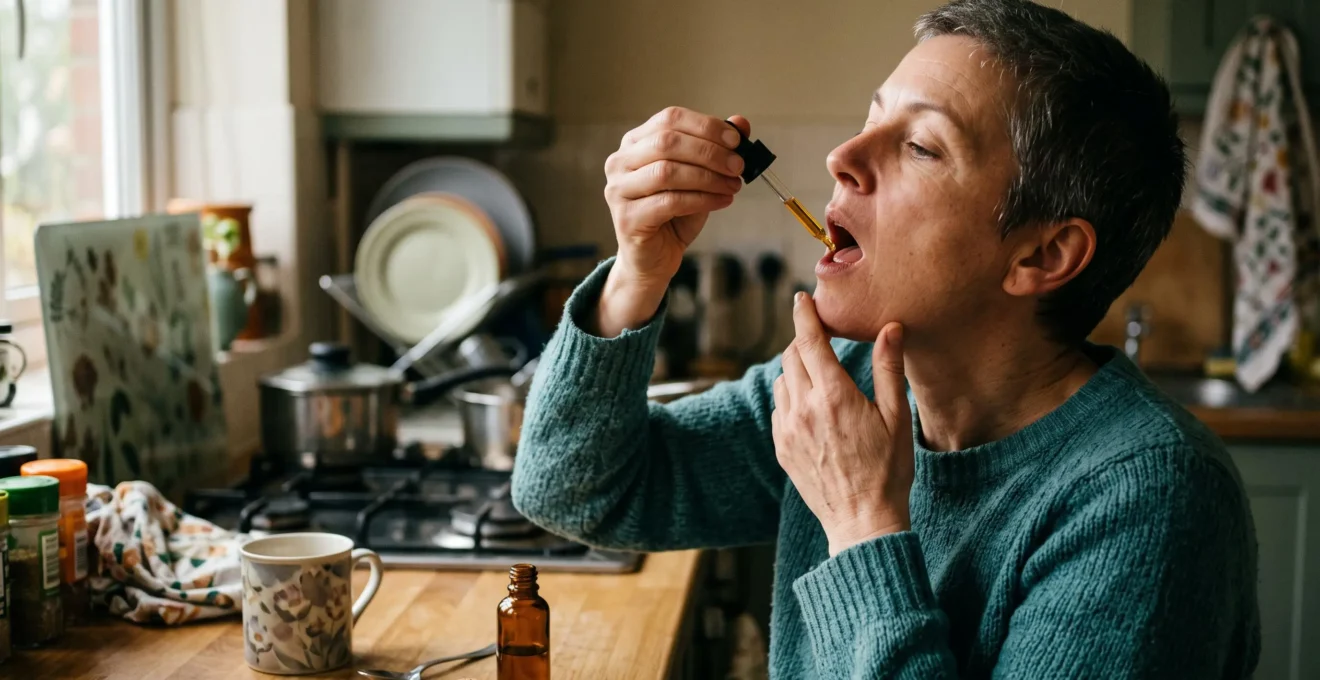
Consistent sublingual CBD administration depends on more than remembering to use the oil every day. The amount measured, the timing of administration, the handling of the dropper and the steps followed beneath the tongue all contribute to how repeatable a routine becomes.
A practical approach is to choose one reliable daily trigger, measure the oil in the same way, follow the product’s administration instructions and record enough information to recognize missed or inconsistent uses. This helps distinguish changes in the routine from changes in how someone feels afterward.
Consistency does not guarantee identical effects or make CBD risk-free. Food intake, product formulation, individual differences and possible interactions with medicines remain relevant. There is also limited direct research establishing the best daily routine for consumer sublingual CBD oils.
For adults already using CBD oil, the aim is therefore straightforward: make each administration easier to repeat, easier to measure and easier to evaluate without independently increasing the amount or frequency used.
Daily sublingual CBD consistency at a glance
- Attach CBD administration to a dependable daily event and repeat the same preparation and administration steps.
- Use the product’s concentration and a suitable measuring device to keep the measured amount consistent, rather than relying on an assumed number of drops.
- Track actual administrations, make changes one at a time and plan how to handle interruptions without doubling up.
- Why Does Changing Your Sublingual Routine Make CBD Use Harder to Track?
- How Can You Build a Simple Sublingual CBD Routine Around the Same Daily Steps?
- Morning or Evening CBD Oil: Which Timing Is Easier to Keep Consistent?
- Which Daily Sublingual Habits Can Contaminate a Dropper or Distort Measurements?
- How Can You Make Daily CBD Oil Easier to Remember Without Constant Reminders?
- Which Dropper Mistakes Can Distort a CBD Oil Measurement by More Than Expected?
- How Can You Make Sublingual CBD Use More Comfortable Without Changing the Measured Amount?
- What Should CBD Oil Users Know About Sensitive Mucous Membranes Under the Tongue?
Why Does Changing Your Sublingual Routine Make CBD Use Harder to Track?
Changing several parts of a sublingual CBD routine at once makes it difficult to understand why an administration feels different from a previous one. When the measured amount, timing, meal conditions or technique vary together, there is no reliable way to identify which change may be responsible. A stable routine provides a more useful reference point.
Consider someone who administers CBD oil before breakfast on Monday, immediately after dinner on Tuesday and at an unpredictable time on Wednesday. Even if the measured volume remains unchanged, the circumstances surrounding each administration differ.
Food is one relevant variable, particularly when part of the oil is swallowed. An original clinical study on CBD pharmacokinetics and food effects investigated a highly purified oral CBD solution under controlled conditions. In its food-effect assessment involving 12 healthy participants, a high-fat meal increased maximum plasma CBD concentration by approximately 4.85 times compared with fasting.
That finding does not mean that a consumer sublingual CBD oil will behave identically. The study used a much higher dose than many consumer products and did not establish the effect of particular under-the-tongue techniques. It does, however, illustrate why meal-related conditions deserve attention when comparing administrations.
Another difficulty is confusing two forms of inconsistency:
- Actual inconsistency: the measured volume, administration time, product or technique changes between uses.
- Perceived inconsistency: the routine remains the same, but the person notices different subjective sensations or no obvious sensation at all.
The second situation does not necessarily indicate an administration error. Subjective effects are influenced by factors that a routine log cannot fully control, and the absence of a noticeable effect does not establish whether CBD was absorbed.
A useful approach is to change only one relevant variable at a time, provided the change is appropriate and consistent with product instructions and professional advice. For example, someone could compare whether a stable morning trigger or a stable evening trigger leads to fewer missed administrations, without changing the measured amount.
Record each administration across a predefined observation period before deciding whether the routine is easier to maintain. Avoid treating a few days of subjective observations as proof of CBD effectiveness.
Once timing, measurement and administration technique are sufficiently stable, the next challenge is turning those choices into simple daily actions rather than a complicated system of rules.
How Can You Build a Simple Sublingual CBD Routine Around the Same Daily Steps?
A simple sublingual CBD routine works best when it follows a recognizable sequence linked to something already done every day. Choose a dependable event, prepare the bottle and measuring device, measure the intended amount, administer it according to the product instructions and record completion. Keeping these steps in the same order reduces avoidable variation.
Instead of relying only on a clock alarm, consider attaching the routine to an existing habit such as brushing teeth, preparing breakfast or finishing a regular evening activity. The most useful trigger is one that occurs on weekends and during ordinary schedule changes, not simply one that feels convenient on weekdays.
Environmental cues have been investigated in other adherence settings. A randomized pilot trial on medication adherence and environmental cues included 62 stroke survivors. Participants receiving a personalized intervention that incorporated environmental cues took 97% of monitored medication doses on schedule, compared with 87% in the control group.
These results cannot be directly transferred to CBD routines. The intervention also addressed medication-related beliefs, and the study did not isolate the independent effect of linking administration to an event. Still, using an established habit as a practical cue is a reasonable strategy to test.
The physical sequence should remain uncomplicated. Check the product label and any handling instructions, including whether mixing is required. Measure the intended volume using the appropriate device, place the oil beneath the tongue without contaminating the dropper, follow the manufacturer’s holding instructions and then swallow as directed.
Do not automatically shake every bottle: follow the formulation-specific instructions, because unnecessary agitation is not a universal requirement for CBD oils.
A minimal record can make the routine easier to assess. Note the measured amount, approximate administration time and whether the planned steps were completed. An optional subjective observation can be recorded separately, without using that observation to justify an unsupervised dose increase.
Five steps to make your CBD routine repeatable
- Choose one everyday trigger. Write down the event that will signal administration, such as finishing your morning toothbrushing routine.
- Confirm the measuring method. Record the product concentration, intended measured volume and the device used to measure it.
- Define a fixed sequence. Create a short written instruction covering product preparation, measurement, placement beneath the tongue and completion.
- Prepare a backup routine. Write down where and when the same planned administration can take place during weekends or travel, subject to safe storage requirements.
- Start a seven-day record. Create seven dated entries with space for completion, measured amount, actual time and one optional observation.
Disruptions should be anticipated rather than treated as failures. A travel version of the routine might use a different physical location while retaining the same product, measurement method and event-based trigger. Storage instructions, local travel rules and the risk of accidental access by children or pets still take priority over convenience.
After the routine itself is clear, choosing a reliable time of day becomes a question of practical adherence rather than finding a supposedly universal best hour for CBD.
Morning or Evening CBD Oil: Which Timing Is Easier to Keep Consistent?
Morning and evening can both support a consistent sublingual CBD routine. The easier option depends on which part of the day offers a dependable trigger, sufficient time and fewer interruptions. Morning may provide established preparation habits, while evening may offer a calmer setting. Neither schedule is universally more effective or easier to maintain.
Morning administration can be tied to a familiar activity such as brushing teeth or preparing breakfast. However, the exact hour may vary between working days and weekends, particularly when wake-up times change.
Evening administration may be easier for people whose mornings are unpredictable. Its disadvantages include fatigue, social commitments, travel and bedtime schedules that shift considerably.
The practical differences are easier to compare side by side:
| Consistency factor | Morning | Evening |
|---|---|---|
| Possible daily trigger | Brushing teeth or preparing breakfast | Evening hygiene or another settled activity |
| Common interruption | Rushed departures or late waking | Fatigue, outings or variable bedtime |
| Weekend challenge | Different wake-up and breakfast times | Different evening commitments |
| Practical advantage | Can fit into an established preparation sequence | May allow more unhurried administration |
| Useful adherence measure | Planned administrations completed | Planned administrations completed |
For an adult choosing between two otherwise appropriate schedules, a simple comparison is to follow each candidate trigger over a predefined period and record how often the planned administration is completed. Keep other relevant conditions as comparable as practical and do not change a clinician-directed schedule without guidance.
The key outcome of this test is actual adherence, not which time of day produces a more noticeable subjective effect. Evening expectations of relaxation, for example, may influence how a person interprets ordinary changes in mood or tiredness.
Splitting an intended daily amount between morning and evening administrations introduces another task to remember and another opportunity for measurement differences. This should not become the default simply because two administrations appear more structured. Frequency and dose changes require consideration of the product and individual safety circumstances.
CBD may also cause drowsiness in some people, so timing decisions should account for activities requiring alertness.
Once the schedule is dependable, careful dropper handling becomes important: a consistent time offers little measurement value if the device or bottle is handled differently each day.
Which Daily Sublingual Habits Can Contaminate a Dropper or Distort Measurements?
Touching a CBD dropper against the tongue, lips or teeth, setting it on an unclean surface or returning a saliva-covered tip to the bottle can introduce contamination. These habits may compromise product hygiene and make later handling less reliable. Keeping the dropper clean and measuring away from the mouth helps protect the routine.
A glass pipette is part of the product’s dispensing system, not a utensil that should routinely contact saliva. Direct oral contact may leave moisture, microorganisms or other residues on the tip. When the dropper is placed back into the bottle, some of that material may be transferred to the remaining oil.
The extent to which contamination affects a particular formulation depends on its ingredients, packaging and storage conditions. It should not be assumed that a single contact necessarily makes the contents unusable, or that contamination produces a predictable change in CBD concentration.
Nevertheless, avoiding contact is a sensible preventive measure. Position the dropper above the intended administration area without touching oral surfaces, or dispense the measured oil into a clean, dry, suitable spoon before administration.
Using a spoon creates a physical separation between the mouth and the bottle. It can also provide a clearer view of the dispensed amount. However, a spoon does not establish accurate milligram measurement on its own: the amount should still be measured with an appropriate calibrated device before transfer.
A practical hygiene routine includes:
- Handling the cap and dropper with clean hands.
- Keeping the dropper tip clear of the tongue, lips, teeth and gums.
- Avoiding contact with countertops or other potentially contaminated surfaces.
- Not returning dispensed oil from a spoon or another container to the bottle.
- Closing the bottle promptly and following its labeled storage and cleaning instructions.
Product condition also matters. Record the opening date and check any stated period of use after opening. Before administration, notice unexpected changes in appearance, odor or packaging integrity. Natural color differences are not automatically evidence of spoilage, while the absence of visible changes does not prove that a product is uncontaminated.
If the dropper has been contaminated or the product appears altered, follow the manufacturer’s guidance and avoid using a product whose safety is uncertain. Do not attempt to disinfect the tip with alcohol or another cleaning agent unless that method is specifically compatible with the dispensing system.
Clean handling should feel like part of the ordinary sequence, not an additional complicated task. Reducing such friction is also useful for remembering the routine consistently.
How Can You Make Daily CBD Oil Easier to Remember Without Constant Reminders?
Daily CBD administration becomes easier to remember when the routine has a recognizable trigger and requires little preparation. Instead of adding repeated phone alerts, associate the planned administration with a stable activity, keep the necessary items accessible under appropriate storage conditions and decide beforehand how missed administrations will be handled.
Forgetting is not always the same problem. Sometimes there is no clear cue: the person intends to use the oil but has not connected it to a specific daily event. In other cases, the cue exists, but the process feels inconvenient because the bottle, measuring device or record is difficult to access.
These situations call for different responses. A missing cue suggests the need for an event-based trigger. Excessive friction suggests that the preparation and storage arrangement should be simplified.
For example, someone who consistently remembers to prepare breakfast but often forgets the planned CBD routine could associate the two activities. The bottle might be kept in an appropriate closed storage location nearby, provided this complies with its temperature and light requirements and prevents access by children, pets or other people.
Visibility can be useful, but safe storage comes before convenience. An exposed bottle beside a hot appliance or within a child’s reach is not an acceptable reminder strategy.
Another important decision concerns missed administrations. A consumer should not assume that every missed CBD use must be taken immediately or that a general catch-up rule applies to every formulation.
If a clinician has recommended CBD, follow that clinician’s instructions. If the product supplies missed-use guidance, follow it. Otherwise, seek professional advice about an appropriate approach rather than improvising additional or closely spaced administrations. In particular, do not double the next amount to compensate for a missed one.
A simple weekly adherence measure can help identify persistent problems. Count the administrations completed as planned and compare that number with the administrations originally scheduled. This gives a factual picture of the routine without requiring constant notifications.
For example, an explicitly hypothetical schedule with seven planned administrations and five completed administrations would indicate two missed opportunities to investigate. That observation describes adherence only; it does not measure CBD absorption or effectiveness.
Once remembering becomes less demanding, the next opportunity for improvement is making sure that the amount measured each time is actually comparable.
Which Dropper Mistakes Can Distort a CBD Oil Measurement by More Than Expected?
CBD oil measurements can vary when a dropper is read from an angle, contains air bubbles, uses misunderstood graduations or delivers uneven drops. The significance of an error depends on the CBD concentration of the oil. A small volume discrepancy can represent a larger milligram difference in a concentrated product.
A frequent problem is confusing the volume of liquid with the amount of CBD it contains. Dropper markings generally describe liquid volume, but the product label may state CBD content in milligrams per milliliter, milligrams per serving or total milligrams per bottle.
These units are related but are not interchangeable. The user must first identify which quantity is printed on the actual product label.
For a product with a verified concentration stated in mg/mL, the calculation is:
CBD amount (mg) = measured oil volume (mL) × CBD concentration (mg/mL).
This formula is a volume-to-content calculation, not a dosing recommendation. It assumes that the stated concentration is correct and that the measured volume is accurate.
For illustration only, a hypothetical oil containing 20 mg/mL would have 2 mg of CBD in 0.1 mL. A hypothetical oil containing 50 mg/mL would have 5 mg in the same volume. These are mathematical examples, not recommended amounts for daily administration.
Several common mistakes can interfere with repeatable measurements:
- Reading at an angle: viewing the oil level from above or below can make the graduation appear misaligned.
- Introducing air bubbles: inconsistent pressure or release of the rubber bulb can trap air and complicate the volume reading.
- Confusing graduations: markings may represent different fractions of a milliliter, depending on the dropper design.
- Counting variable drops: drop size can change with the tip, viscosity, dispensing angle and technique.
- Ignoring product instructions: formulations requiring specific preparation may not dispense consistently if handled incorrectly.
Read graduations at eye level, check the unit markings and make sure the liquid column is free of significant bubbles before interpreting the measurement. If the markings are unclear or the dropper is not suitable for accurate measurement, ask the manufacturer or a pharmacist about an appropriate measuring device.
Counting drops from a measured volume may provide a rough product-and-device-specific reference, but it should not replace calibrated measurement. A count obtained once cannot guarantee that every later drop contains the same volume, and a universal number of drops per milliliter should not be assumed.
There is also an important difference between accurate dispensing and accurate labeling. A 2017 JAMA research study on CBD extract labeling accuracy analyzed 84 CBD products purchased online in 2016. Only 26 products, or approximately 30.95%, met the researchers’ criterion for accurately labeled CBD content.
26 of 84 products
Met the researchers’ labeling accuracy criterion in the historical JAMA sample of online CBD extracts purchased in 2016. This does not establish the current prevalence of inaccurate labeling.
JAMA Network, “Labeling Accuracy of Cannabidiol Extracts Sold Online,” published November 7, 2017.
Even careful dropper technique cannot correct an inaccurate label. Independent batch testing and a product-specific certificate of analysis may help assess declared content, although document authenticity, laboratory methods and batch matching still need consideration.
Measurement is only one part of a workable routine. If administration feels unpleasant, a person may shorten, avoid or change the procedure despite having measured the oil correctly.
How Can You Make Sublingual CBD Use More Comfortable Without Changing the Measured Amount?
Sublingual CBD administration may feel more comfortable when the user adjusts the handling technique or selects a better-tolerated formulation without changing the intended measured amount. Taste, oil texture, tongue position and the duration of contact may affect the experience. However, changes to formulation or holding time can also affect administration and should not be assumed equivalent.
Some CBD oils have a noticeable earthy or bitter taste, while others feel thick or leave a lingering coating beneath the tongue. These characteristics can make an otherwise simple daily routine harder to maintain.
The first adjustment is to separate measurement from placement. Measure the intended volume carefully before bringing the oil toward the mouth. This allows attention to shift from reading a dropper to administering the already measured amount without rushing.
Positioning the oil in the space beneath the tongue, rather than deliberately spreading it over the gums, may help some users tolerate the sensation. A relaxed tongue position may also make it easier to avoid unnecessary movement. Neither adjustment has been established as a method for guaranteeing a particular amount of CBD absorption.
When taste is the main obstacle, a different product formulation may be worth discussing with a qualified professional. An oil containing flavoring ingredients may be more acceptable to some users, but it should be checked for potentially irritating ingredients, allergens and changes in cannabinoid concentration.
Matching the concentration does not guarantee equivalent absorption. Carrier oils, flavoring agents and other formulation differences may matter, so changing products should not be treated as a purely cosmetic adjustment.
Temperature also deserves caution. Slight cooling might change the subjective sensation or viscosity of an oil, but there is no established general cooling procedure in the supplied evidence that improves sublingual CBD tolerability. Follow labeled storage temperatures rather than experimenting with refrigeration or chilling.
The duration of contact beneath the tongue is another possible source of discomfort. A person who finds the specified holding period difficult should consult product instructions or an appropriate professional before altering it. Swallowing earlier changes the administration process and may change exposure, even when the measured volume is unchanged.
Similarly, adding another liquid, diluting the oil or using less product to avoid the taste can change concentration, delivery or the actual amount administered. Rinsing the mouth before the instructed administration is complete may also alter the procedure.
The practical distinction is between maintaining the intended measured amount and maintaining equivalent delivery. The former can be checked with a suitable measuring device; the latter cannot be guaranteed merely because the same number of milliliters was dispensed.
Discomfort should not always be managed by adjusting technique. Persistent burning, redness or soreness may indicate irritation that deserves attention before further administration.
Key takeaways before assessing sublingual sensitivity
- Comfort adjustments should not mask persistent oral irritation or lead to repeated use on painful tissue.
- A product’s carrier oil and flavoring ingredients may be relevant when discomfort continues despite careful handling.
- Unexplained changes in oral comfort deserve separate attention from measurement accuracy or adherence.
What Should CBD Oil Users Know About Sensitive Mucous Membranes Under the Tongue?
The mucous membranes beneath the tongue are thin, moist and supplied by blood vessels, making them relevant to sublingual drug delivery and potentially sensitive to irritation. Repeated discomfort, burning or visible tissue changes should not be treated as normal features of a successful CBD routine. Persistent symptoms warrant stopping the irritating exposure and seeking professional advice.
Sublingual administration places a substance in contact with tissue that differs from the outer skin. The thin mucosal lining and underlying circulation can permit absorption of certain substances, although the actual contribution of sublingual absorption varies with the formulation and how the product is used.
For CBD oil, not all of the administered amount necessarily crosses the mucosa. Some may be swallowed and subsequently handled through gastrointestinal absorption and metabolism. The proportion cannot be reliably inferred from the length of time the oil feels present beneath the tongue.
Potential signs of irritation include:
- Persistent stinging or tingling after administration.
- Redness or localized soreness beneath the tongue.
- A burning sensation that continues after the oil has been swallowed.
- Recurring tenderness or discomfort at the same contact area.
These symptoms do not, on their own, identify the cause. Some formulations contain alcohol, flavoring agents or other ingredients that may be poorly tolerated. Mechanical contact from the dropper, existing mouth lesions, dental conditions or unrelated oral health problems may also contribute.
Distinguishing the possibilities requires more than assuming that CBD itself is responsible. Review the product’s ingredient list, consider whether discomfort coincided with a formulation change and note whether the dropper repeatedly touches the same area.
Avoiding direct contact between the dropper and oral tissue is an appropriate first handling precaution. Slightly varying the placement area may help avoid repeated mechanical contact at one precise spot, but it is not a treatment for an already irritated mucosa and has not been demonstrated to resolve product-related sensitivity.
Do not continue repeatedly exposing painful or visibly irritated tissue merely to preserve a daily adherence target. Seek advice from a dentist, physician or other appropriate healthcare professional if irritation persists, recurs or is accompanied by swelling or oral lesions. Significant swelling or difficulty breathing requires urgent medical attention.
The wider safety context also matters. The FDA consumer information on CBD safety and unknowns identifies potential adverse effects, including drowsiness, gastrointestinal symptoms and possible liver injury, as well as interactions with medications. It also emphasizes unresolved questions about sustained daily CBD use.
These FDA statements concern the United States and should not be interpreted as identical regulatory guidance in every English-speaking country. People using prescription medicines, or managing a medical condition, should discuss regular CBD consumption with a healthcare professional.
Irritation may indirectly undermine consistency by making an administration unpleasant or causing someone to shorten or skip the routine. However, the supplied evidence does not quantify how local sublingual irritation changes CBD absorption. Any such effect should therefore be treated as uncertain rather than predictable.
For the next planned administration, review the product instructions, confirm the measuring method and check that the mouth feels comfortable. Keep a straightforward record of the process, and seek professional guidance whenever adverse effects, medication interactions or persistent irritation raise concerns. Consistency is useful only when the routine remains appropriate and safe for the individual.
Does taking CBD oil at exactly the same minute every day matter?
There is no established universal minute-by-minute timing requirement for consumer sublingual CBD oil. An event-based routine may be easier to follow than an exact clock time, provided the schedule is compatible with the product instructions and any healthcare guidance. For tracking purposes, record the actual administration time when it differs from the plan.
Can two CBD oils with the same labeled strength be measured in exactly the same way?
Not necessarily. The bottles may use different droppers, graduations or formulations. Confirm whether the strength is expressed as mg/mL, total milligrams per bottle or another quantity, and use an appropriate calibrated measuring device. Identical labeled CBD concentrations do not guarantee identical drop sizes or absorption.
What if a CBD administration is accidentally repeated?
Do not take another amount to compensate or attempt to balance the mistake through further self-directed dosing. Record what was taken and when, check the product information, and contact a healthcare professional or local poison advice service for individualized guidance, particularly if the amount is uncertain, other medicines are involved or symptoms appear.
Should a CBD bottle be replaced if the dropper touched the tongue?
Oral contact creates a potential contamination concern, but it does not establish that every bottle is immediately unsafe. Avoid further contamination, follow the manufacturer’s hygiene guidance and seek product-specific advice if saliva may have entered the bottle. Do not rely solely on smell or appearance to decide whether contaminated oil is safe.
Does keeping a daily CBD log prove that the oil is working?
No. A log can show whether administrations occurred as planned, whether the measured amount was consistent and whether the user noticed changes. It cannot establish causation, confirm actual CBD exposure or demonstrate medical effectiveness. Perceived effects and adherence should be evaluated as separate questions.